
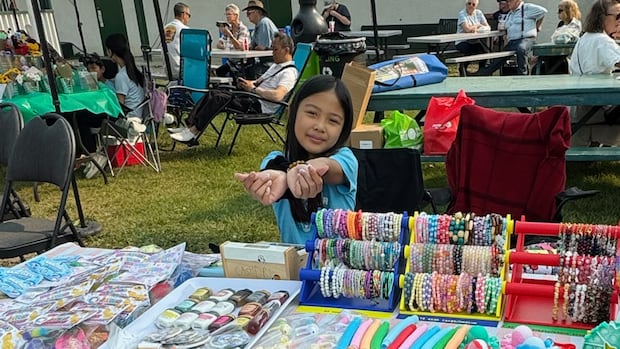

At just six years old, Jayden Karlee Castillo began her entrepreneurial journey by selling toys outside her home.
Three years later, she continues her business, expanding her product range and reaching more customers.
In July, Castillo participated in the inaugural Kids Markets event in Millarville, Alberta, near Calgary, where she sold various items, including handmade bracelets, earrings, and 3D-printed toys, as well as hand sanitizers and squishies sourced from wholesalers.
To date, she has saved several hundred dollars for a trip to Japan and the Philippines, along with additional plans.
“I really want to treat my parents to a nice dinner,” Castillo shared with CBC’s Cost of Living.
The Kids Markets initiative, which allows children aged five to 17 to sell their own creations, is not the only program aiding young entrepreneurs in bringing their ideas to life.
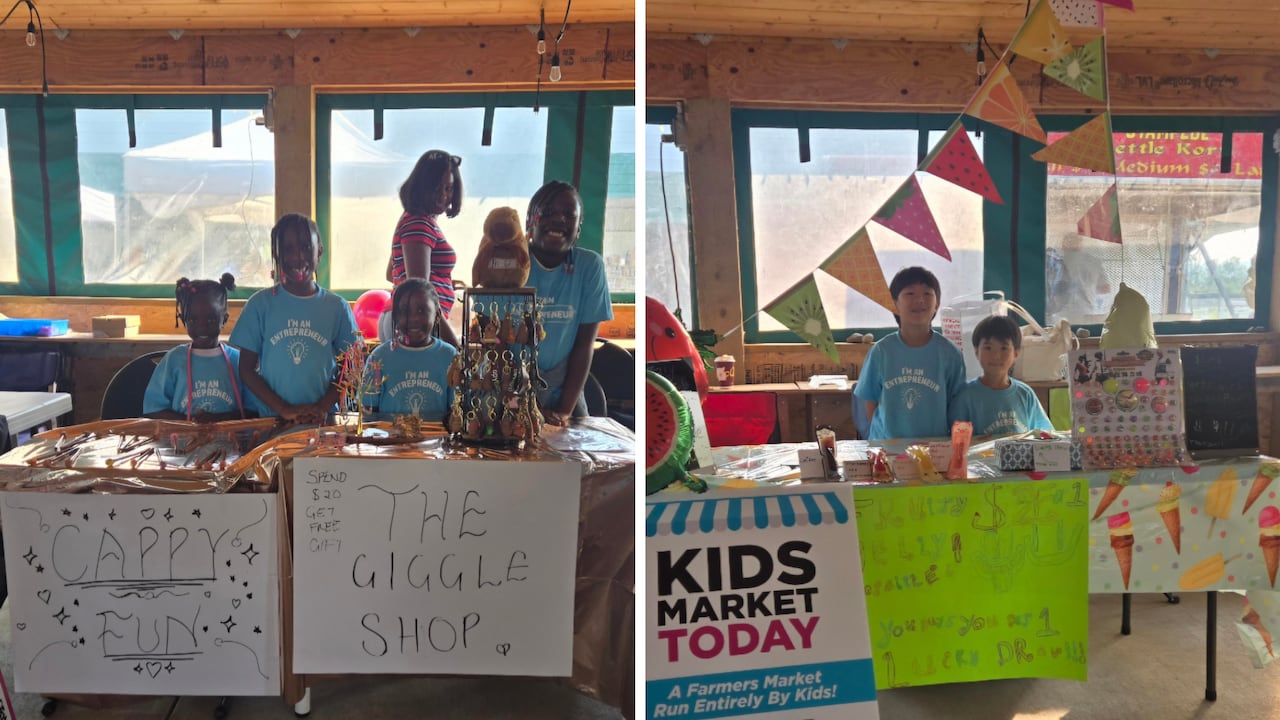
Since launching in June this year, Kids Markets has featured an average of 16 youth-run businesses at each of their events. (Kids Markets Calgary)
In British Columbia, children can market their products through BizKids Market, while in Toronto, an annual event known as Kid2Kid takes place. Additionally, there’s the Children’s Business Fair in Brandon, Manitoba, along with other similar programs nationwide.
Jodi Letkiewicz, an assistant professor of finance at California State University, notes that while kids have been starting small businesses for years, the trend has significantly increased recently.
“There have always been kid-preneurs … but now it seems to have exploded.”
What’s driving the increase in young entrepreneurs?
Lemonade Day Calgary, a program that encourages kids to run their own lemonade stands, attracted a record 792 participants this year. This is a significant increase from the 164 who participated when the U.S.-originated program was introduced in Calgary in 2023, according to Chantelle Little, who brought the initiative to Canada.
Letkiewicz, who studies how children understand finances, explains that there is no single factor leading to the growing interest in entrepreneurship among youth. However, social media has made it easier for children to witness peers successfully managing their own ventures.
Platforms like YouTube allow children to learn about starting a business, while AI tools assist in developing ideas, creating business names and logos, researching customers, setting prices, building websites, and managing basic bookkeeping.

Jodi Letkiewicz is an assistant professor of finance at California State University, focusing on how parental influence shapes children’s financial knowledge and behavior. (Submitted by Jodi Letkiewicz)
For some youngsters, the increasing cost of living may be making financial independence more appealing, according to Letkiewicz. Children are becoming more aware of prices and exploring ways to earn their own money.
“Consider how frequently we discuss the cost of living nowadays, whether at the dinner table, among parents conversing with friends, or on the news in the car … they’re absorbing that information,” she noted.
A solid foundation for the future
Another factor may be the nature of childhood itself: children tend to be curious, imaginative, and willing to take risks, often without the fear of failure that can come with age.
“They might have a passion for something,” Letkiewicz stated. “You don’t want to extinguish that.”
This is true for Calgary’s Atley Ma, who recognized an opportunity at the age of nine.
“We used to refill our own Soda Stream canisters because it was more economical, and we began doing it for friends and family. Then I thought, ‘why not turn it into a business?’”

Atley Ma, also known as SodaKid, started his business at nine years old and has gained invaluable rewards along his journey. (Submitted by Atley Ma)
It evolved into a successful venture called SodaKid. Now 18, Ma has earned enough money to pay for his engineering degree at university.
Ma attributes his success not only to word-of-mouth promotion but also to the unique benefits of being a child.
“You’re a bit cuter and smaller than everyone else selling the same items,” he explained.
Additionally, children can gain more than just extra income, according to Ross Levine, an economist and senior fellow at the Hoover Institution at Stanford University. They also “learn an incredible amount” from managing the various aspects of running a small business.
“They acquire numerous skills including financial literacy, problem-solving, coordination with others, and an understanding of balance sheets,” he noted.
These skills have been beneficial for Chantelle Little of Lemonade Day Calgary. An entrepreneur for 18 years, she began her journey selling soda at a golf course as a child. Today, she is the founder and CEO of Tiller, a digital marketing agency, and credits her early experiences for her current success.
“I didn’t realize I was operating a business at the time, but looking back, that’s where I first got a taste of sales,” she remarked.

Chantelle Little enjoys a moment with young entrepreneurs who devised creative strategies to sell lemonade. (Lemonade Day Calgary)
‘The world is your oyster’
Support from family is another crucial aspect of youth entrepreneurship, Letkiewicz emphasizes.
“It’s all about the resources available to you, whether within your family or community,” she noted.
Sisters Emery and Hannah Hynes, who operate a soap and candle business in London, Ontario, shared with CBC London how their mother covers the costs for a table at a farmer’s market.
“We’re really thankful that our mom has invested so much and supported us financially,” Hannah expressed. “It’s wonderful to engage in activities like this because we genuinely enjoy it.”
-
Meet these young entrepreneurs making their own summer jobs
-
Want a summer job? These kid and teen entrepreneurs didn’t wait to be hired
Ma mentions that creating a website for SodaKid helped him discover his passion for computer engineering.
Now, he aspires for another young entrepreneur to take over SodaKid and expand it further.
“At that young age, the world is your oyster,” Ma said. “You have boundless possibilities, and it teaches you hard work, organization, and people skills, plus you might earn a bit of money on the side.”

