
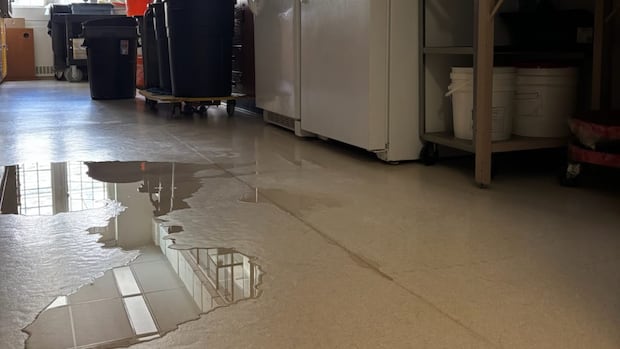
A power outage lasting four days at Western University in London, Ontario, has resulted in the loss of invaluable research samples, postponed experiments, and has raised doubts among biology students and faculty about the university’s ability to safeguard millions of dollars in scientific research.
The Biological & Geological Sciences Building, along with the Materials Sciences Addition, Chemistry Building, and Natural Sciences Centre, have been utilizing backup power since last Friday due to an issue at a campus power substation.
Western announced that power was restored to most facilities on Friday evening; however, the four impacted buildings are still relying on backup power while repair teams continue their work. The university has limited access to these buildings “out of an abundance of caution” and is collaborating with students, faculty, and staff to resolve individual issues, which includes facilitating access to meet research needs.
Students and faculty members report that this incident marks the fifth significant power outage affecting biology research facilities since August 2025.
“We’re going to be seen as a laughing stock,” remarked Beth MacDougall-Shackleton, a professor of biology.
“Not only my Canadian peers but also colleagues I’ve spoken with in so-called ‘developing countries’ — they all enjoy much more reliable power access than we do here.”

Beth MacDougall-Shackleton, a biology professor at Western, warns that the university risks becoming a laughing stock if power reliability does not improve. (Submitted by Beth MacDougall-Shackleton)
MacDougall-Shackleton emphasized that biology research relies heavily on stable environments for living organisms and temperature-sensitive materials. Instead, growth chambers housing insects and plants are experiencing overheating, while freezers containing research samples are defrosting due to inadequate backup power, and researchers have been unable to access animals used for their studies.
These outages have also compelled the department to replace research materials, including reagents and enzymes, costing thousands of dollars, she noted.
However, the most significant losses cannot be quantified financially.
Graduate students have dedicated months or even years to breeding insects, cultivating plants, and growing bacterial strains, many of which may no longer be viable.
“You can’t even assign a dollar value to the samples that have been lost,” stated Matheus Sanita Lima, a fifth-year PhD candidate in biology and chair of the Society of Biology Graduate Students.

Matheus Sanita Lima, a fifth-year PhD candidate and chair of the Society of Biology Graduate Students at Western University, reports that irreplaceable samples have been lost due to the power outage. (Submitted by Matheus Sanita Lima)
Sanita Lima mentioned that the department has lost unique samples, including specimens from extinct species, collections dating back to the 1970s, and materials from long-term cohort studies that cannot be replicated.
For graduate students facing strict research deadlines, such losses could translate into months or years of extra work.
Students and faculty urge action
Both Sanita Lima and MacDougall-Shackleton reported that they have continuously expressed their concerns to Western’s administration during this and previous outages, but their frustrations with the responses have grown.
“There seems to be a lack of agreement on whether it’s the university’s duty to maintain power,” MacDougall-Shackleton commented.
During a meeting on Monday, graduate students, faculty, and staff decided to reach out to their respective unions. They believe that Western’s handling of the repeated outages may contradict provisions in their collective agreements that require the university to provide the necessary infrastructure for teaching and research.
They are also advocating for Western to commit to a series of improvements.
In the immediate future, they seek faster and clearer communication from the university during outages, including regular updates on power restoration timelines.
In the long run, they are urging Western to invest in updating the campus electrical system and to enhance maintenance staffing levels, especially as the university continues to grow.
Concerns over reputation and potential funding losses
MacDougall-Shackleton expressed that the ongoing outages pose a threat to Western’s reputation among research collaborators, donors, and taxpayers who support the university’s scientific endeavors.
She also cautioned that these issues could endanger significant research funding.
Research involving vertebrate animals at Canadian universities is regulated by the Canadian Council on Animal Care. If Western were to lose its accreditation with this organization, she stated, it could jeopardize approximately $60 million in annual Tri-Council funding.
“Financially, this is crucial, and it’s surprising to me that Western does not take this matter seriously,” she said.
The power outages have also hindered researchers from independently accessing animal facilities, which are secured by electronic card-access systems.
MacDougall-Shackleton noted that researchers have had to repeatedly contact Western’s special constables for permission to enter these facilities to bring in portable air conditioning units to prevent overheating of the animals.
“It makes me feel ill to think about the risks we are facing.”

