

The Competition Bureau of Canada has come to an agreement with the parent company of Sobeys to impose strict limitations or halt the use of property controls, following the agency’s conclusion that this practice stifles competition.
Property controls are contractual provisions in land titles that may prevent competing grocery stores from establishing new locations nearby (known as exclusivity clauses) or restrict food items from being sold in nearby pet shops, dollar stores, gyms, or other retailers, as well as limit what future tenants can offer on the premises (restrictive covenants).
Empire Company Limited, which operates Sobeys, Farm Boy, Safeway, Freshco, IGA, and others, has faced mounting pressure from the consumer watchdog for several months to eliminate these property controls.
“This investigation began in 2024 concerning the property control practices of Loblaw and Sobeys and their repercussions in the grocery market,” stated Anthony Durocher, acting senior deputy commissioner of the Competition Bureau.
“Loblaw has made commitments to reduce its use,” he informed CBC News. “We now also have an agreement with Sobeys.”
A victory for consumers, according to an economist
The inquiry into the property control practices of major Canadian grocery chains was prompted by federal committee hearings in 2023 aimed at addressing escalating grocery prices.
“Sobeys has proven to be particularly challenging,” remarked economist Jim Stanford, who provided testimony during those hearings. “They initially denied any wrongdoing and were committed to maintaining these practices.”
-
Marketplace
How grocery giants control who can sell food in your neighbourhood
-
Competition Bureau looking deeper into how Sobeys can control who sells food in your area
The recent agreement marks a significant victory for the bureau and consumers alike, he noted.
“This signifies acknowledgment that these practices are economically and morally wrong, and the Competition Bureau is taking them seriously.”
Documents from land titles acquired by CBC’s Marketplace earlier this year revealed that stores located within a five-kilometre radius of a grocery chain faced restrictions on selling perishable items, including “fresh or frozen food, meats, fruits, vegetables, fish, poultry, bakery products, pre-packaged bread, delicatessen items, bulk food, or dairy goods.”
Why are grocery prices so high? One factor may be property controls — a powerful tool that big groceries can use to block competition and control local markets across Canada. Marketplace breaks down how it works and why it can take a toll on your wallet.
Some limitations also barred nearby retailers, including dollar stores, from providing significant discounts on major national brands such as Kraft, Coca-Cola, and Evian.
A representative from Sobeys’ parent company, Empire, stated to CBC News that they are “pleased to have settled the issue of property controls with the Competition Bureau,” emphasizing their commitment to ongoing investment in their store network across Canada.
Empire Company Limited ranks as the second-largest grocery network in Canada, following George Weston Limited, which owns Loblaws, No Frills, Superstore, Zehrs, Dominion, Fortinos, Freshmart, and more.
Loblaws had previously committed to cease enforcing its restrictive covenants and to reduce its exclusivity clauses by 2025, in response to the Competition Bureau’s initial investigation. The bureau continues to monitor this commitment.
‘Exclusivity clauses’ still allowed
Although the new agreement legally binds Empire to refrain from employing new or existing restrictive covenants, it permits “limited” usage of exclusivity clauses.
This implies that while the company cannot restrict what other businesses can sell, it can still bar direct competitors from setting up shop in a shared development.
“In certain situations, this may be justified,” Durocher stated, citing the Competition Bureau’s public guidance for retailers.
The guidance indicates that a “limited” exclusivity clause can foster competition in instances where “no retailer would otherwise make the essential investments to secure a key position in a new shopping plaza.” It further clarifies that without such a clause, no retailers of a specific type would risk opening in the plaza, thus “increasing competition.”
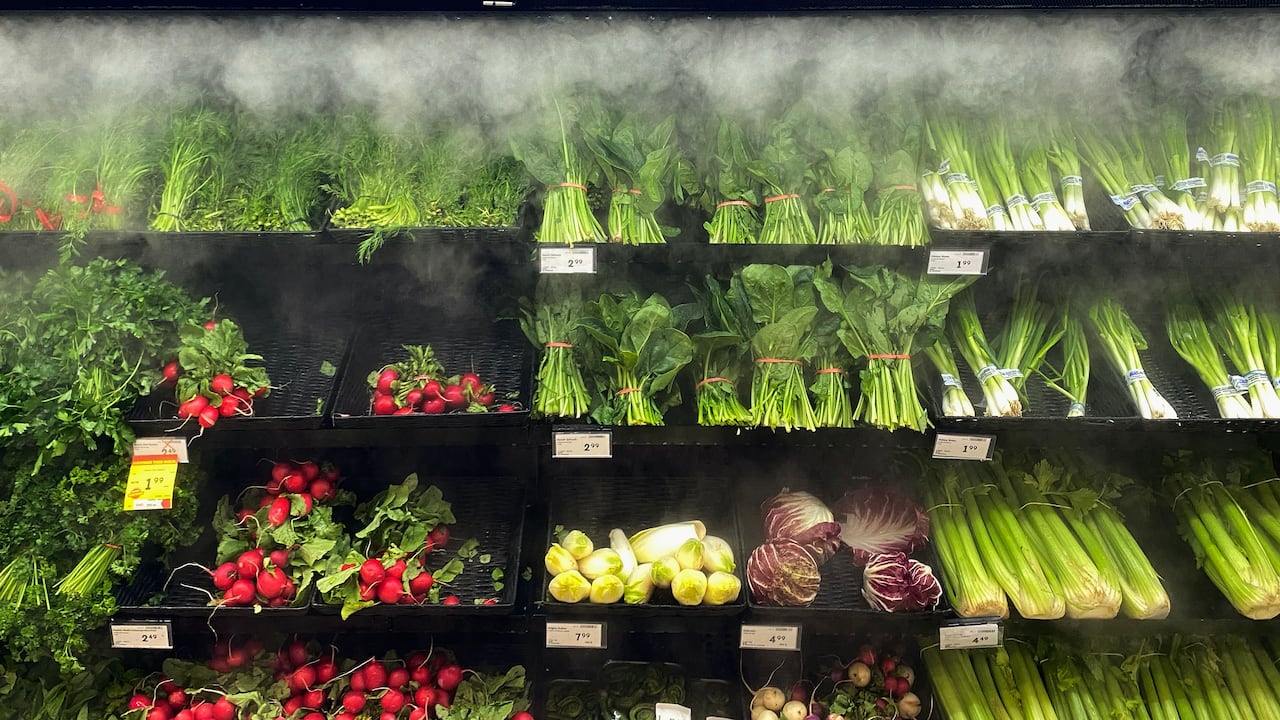
Produce is displayed at a Sobeys store in Toronto in this 2023 file photo. Canada’s Competition Bureau initiated a review of the country’s entire food supply chain earlier this year to tackle high grocery prices. (Graeme Roy/The Canadian Press)
The bureau is ready to assess each situation individually, Durocher mentioned, having identified 19 instances on properties occupied by Empire-owned grocery stores during their investigation.
Earlier this year, the federal government empowered the Competition Bureau with enhanced authority to enforce its property control regulations.
Ultimately, Durocher added, this facilitates the establishment of grocers, butchers, and bakeries, enhancing competition. “Increased competition leads to lower prices, more options, and greater innovation,” he remarked.
-
Competition Bureau to examine Canada’s food supply chain
-
Ottawa has struggled to increase grocery competition. Will the new food strategy help?
Durocher indicated that the bureau would continue addressing the property control issue, “including in relation to other grocery chains.” At the same time, it will advance with a formal examination of the industry’s competitive barriers that began in June, he added.
This examination includes inquiries into production and processing, distribution, and retail pricing throughout Canada’s food supply chain.
As this examination progresses, the Competition Bureau may find itself somewhat “hamstrung” by its limited powers, according to Stanford, who expressed a desire to see more measures taken to “prevent these companies from becoming excessively large in the first place.”
“I find this encouraging, but whether it signifies the dawn of a new era in tackling food oligopolies remains to be seen,” he concluded.

