
Two iconic franchises in the realm of horror video games, Resident Evil and Silent Hill, both originated in the late 1990s on the inaugural Sony PlayStation and continue to introduce new titles today.
However, Silent Hill’s psychological approach to horror has attracted a more specialized audience compared to the mainstream appeal of Resident Evil.
Rather than featuring police officers and secret agents exchanging banter during a zombie crisis, Silent Hill immerses players in harrowing environments, filled with unreliable narrators and allegories addressing past traumas and sins.
Silent Hill: Townfall, released by Konami and developed by Screen Burn Interactive from Glasgow, boasts moments that exemplify horror in gaming at its finest. However, with a mix of mechanics that sometimes clash, players may find themselves enjoying one aspect while disliking another.
Welcome to St. Amelia
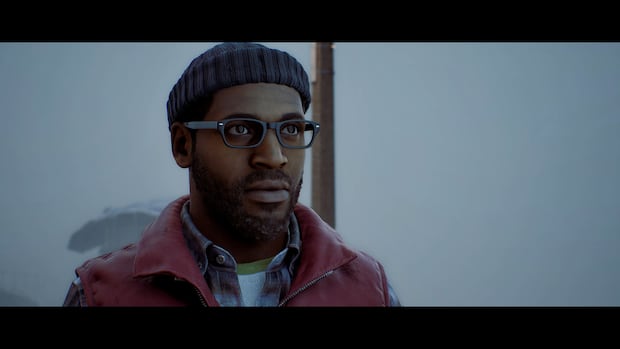
Townfall’s opening scenario is peculiar. Set in 1996, we follow Simon Ordell, an American (voiced by The Leftovers‘ Jovan Adepo), who washes up on the shores of St. Amelia, a deserted Scottish fishing village, with no recollection of how he arrived there. Attached to his arm is an IV bag, its tubing connected to his left hand.
The town square is filled with protest signs, suggesting that a corporation is responsible for some disaster. Simon answers a ringing payphone and converses with a man named Richard (Lost’s Terry O’Quinn), who instructs him to locate a nurse named Zoe Ellis (Kezia Burrows). Although Zoe knows Simon, he has no memory of her.
Once a lively fishing community, the town is now inhabited by grotesque humanoid creatures that moan and growl, despite their lack of facial features.

The haunting, seemingly deserted Scottish fishing village of St. Amelia serves as the backdrop for Silent Hill: Townfall. (Screen Burn/Konami Digital Entertainment and Annapurna Interactive)
A crucial tool for Simon’s survival is the CRTV—a handheld portable television reminiscent of Sony’s Sport Watchman. By tuning this device, he can reveal the trembling silhouettes of enemies against a garbled red screen, enabling him to stealthily navigate past them.
The fuzzy screen also transmits cryptic messages, providing glimpses of his objectives, such as Zoe’s residence, or hints to unlock a rusty locker in a pharmacy’s back area, occasionally featuring snippets of dialogue from Zoe or Richard through its low-quality speaker.
Additionally, Simon’s resources for confronting foes are quite limited: throwing a bottle can divert their focus; a decaying wooden plank can endure a single melee strike but will soon break. A handgun serves as a powerful last resort, though ammunition is scarce.
This atmosphere instills a sense of dread and powerlessness, compelling players to evade combat whenever possible.

The CRTV, a portable handheld television device, enables players to locate clues in the environment and monitor enemy movements. (Screen Burn/Konami Digital Entertainment and Annapurna Interactive)
First-person stumbles
In a series first, Townfall is experienced entirely from a first-person viewpoint, allowing players to see through Simon’s eyes (though a few segments switch perspectives to Zoe or Richard).
Since visibility is restricted to what lies directly ahead, players frequently find themselves scanning left and right while relying on auditory cues and the CRTV to track nearby threats.

The player rushes into a clinic and secures the door just in time to prevent a horrific creature from breaking in. (Screen Burn/Konami Digital Entertainment and Annapurna Interactive)
However, this new perspective has its challenges; prompts appear when approaching objects or items to interact with, but the symbols and text displayed on screen can be too small to read quickly.
Often, while frantically searching for a closet to hide from a pursuing monster, I lost precious seconds looking for the “X” button prompt to appear. At times, while attempting to evade an enemy in a narrow corridor, I mistakenly pressed the button, thinking I was picking up a health item, only to accidentally slam the door in my own face, leading to my demise.

Simon is in search of Zoe Ellis (Kezia Burrows), a nurse who might hold the key to understanding his situation in St. Amelia. (Screen Burn/Konami Digital Entertainment and Annapurna Interactive)
Masters of unlocking
Silent Hill: Townfall shines brightest when players explore areas of the town like a massive puzzle, sifting through eerie homes and alleyways to discover their next destination.
You will rely on your paper map, marked in red to indicate locked doors and previously searched areas, strategizing your next moves, mentally noting enemy locations, and taking a deep breath before embarking on the next search for a clue or item. Each step you take feels just enticing enough to keep you engaged for hours.

Players will examine old emails and programs on floppy disks using vintage ’90s computers in Silent Hill: Townfall. (Screen Burn/Konami Digital Entertainment and Annapurna Interactive)
You will also spend considerable time staring at ’90s computer screens, checking answering machines for messages beside landline phones and rummaging for floppy disks and cassette tapes during your journey.
This fascination with retro technology is a hallmark of developer Screen Burn, formerly known as No Code, who adeptly utilized the unsettling sensation evoked by a monitor’s low hum in their 2017 hit Stories Untold.
The Weight of it all
The danger escalates (and the metaphysical deepens) when St. Amelia is enveloped in an alternate reality, potentially reflecting a fragment of Simon’s mind. This realm is drenched in a sinister red glow. Black iron pipes obstruct once-clear paths, and enemies pursue you in greater numbers.
This aspect is typical of Silent Hill titles, made even more frightening by the introduction of The Weight—a large, grotesque entity that can eliminate you instantly upon contact.
The “evade the big threat” mechanic is prevalent in horror games, and the team at Screen Burn includes members who previously contributed to Alien: Isolation, a notable entry in that subgenre.
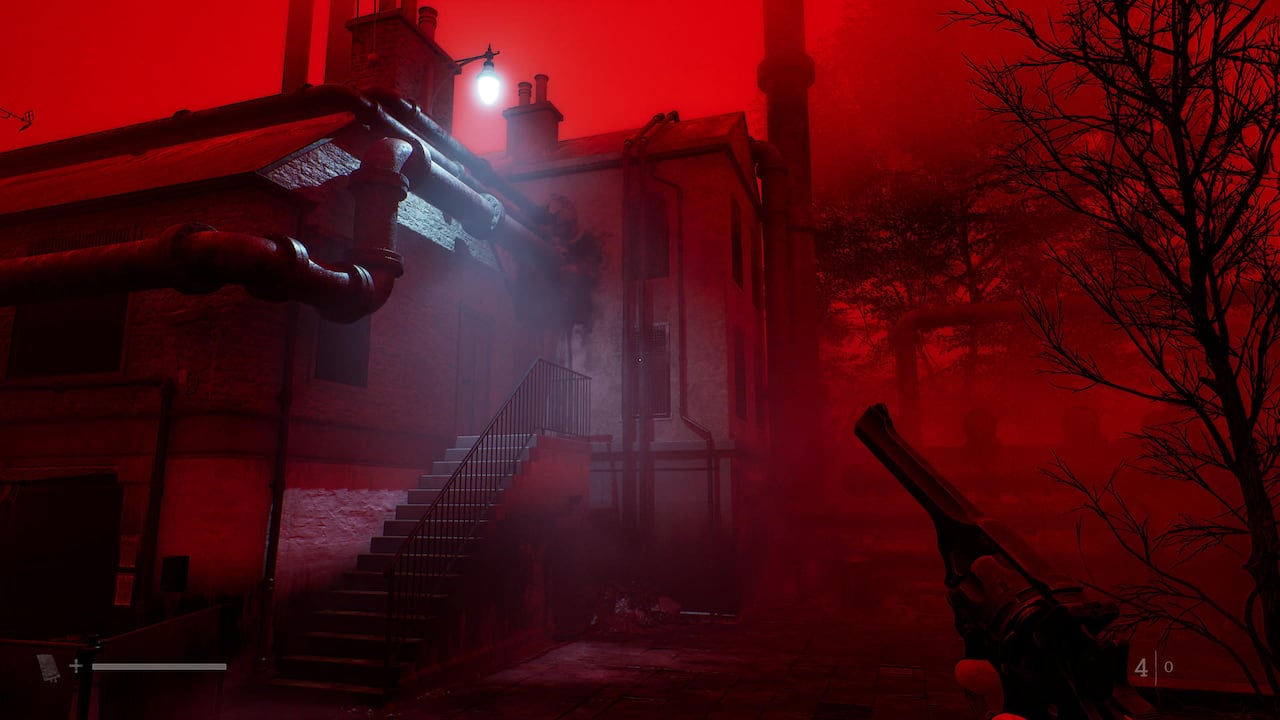
Silent Hill: Townfall reaches its peak of danger when it transports players into a haunted alternate dimension of St. Amelia, illuminated by blood-red light. (Screen Burn/Konami Digital Entertainment and Annapurna Interactive)
However, this leads to frustration, as The Weight moves unpredictably and can sometimes block your hiding spot, leaving you trapped for extended periods.
Most frustratingly, if it catches you, the game often respawns you at the same location where you died—with The Weight still in front of you, creating an irritating cycle of failure.
Additionally, while the initial visuals in St. Amelia’s nightmare world are striking, they become monotonous over time.
This is particularly disappointing because certain elements of “normal” St. Amelia are uniquely captivating. An apartment within a corporate housing block appears to shift and alter according to a series of haunted cassette tapes. Later, Richard attempts to ascend an office tower swarming with monsters, scavenging precious shotgun shells left behind by those who failed before him.
Another attempt? For die-hards, maybe
After enduring over 18 hours in Silent Hill: Townfall, I reached the conclusion of the narrative—or at least one of its endings. The game contains at least five alternative endings, each (hopefully) illuminating the tragedy surrounding St. Amelia and the roles of Richard, Zoe, and Simon within it.
The series is recognized for prioritizing atmosphere over narrative clarity, but even so, I felt disheartened by the number of unresolved questions or how many additional attempts I would need to make to uncover new insights.
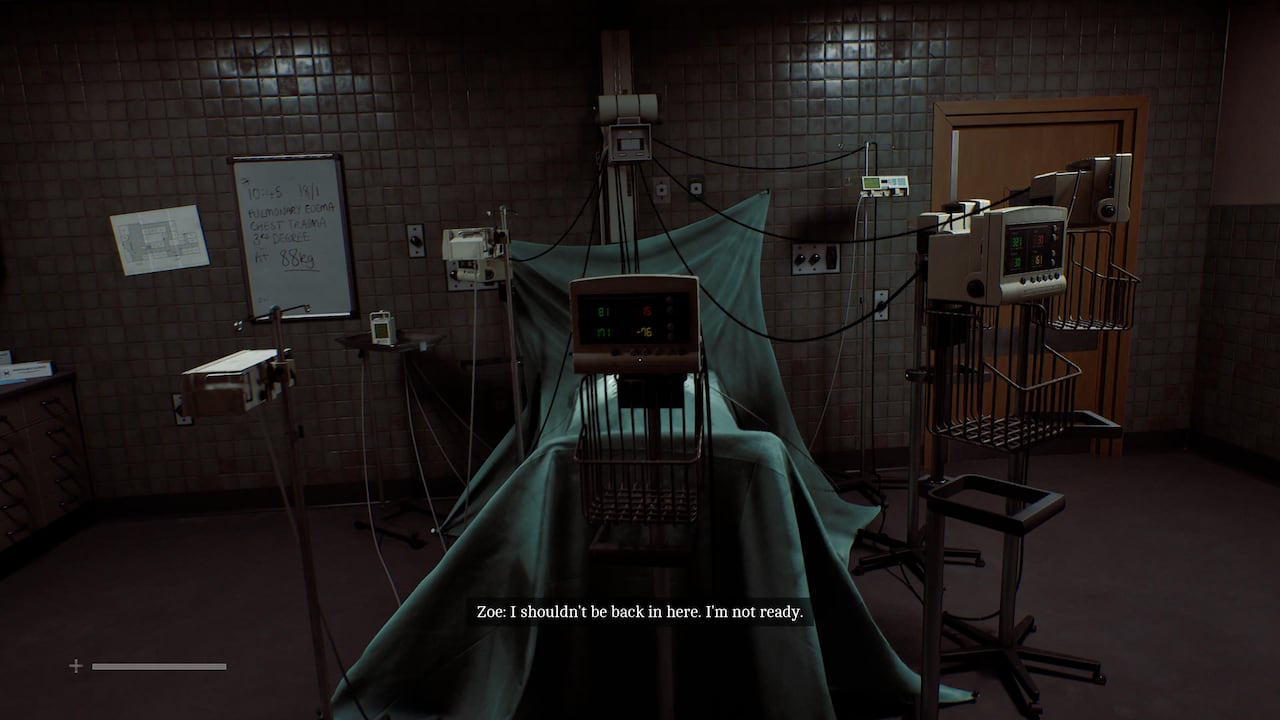
A grim situation faces Zoe the nurse in Silent Hill: Townfall. (Screen Burn/Konami Digital Entertainment and Annapurna Interactive)
The thrill I experienced while exploring the town contrasted sharply with the frustration of evading The Weight—to the extent that it may only be the most dedicated Silent Hill enthusiasts, or those who appreciate the conflicting aspects of horror in video games, who will be able to complete the entire experience once, let alone multiple times.

