

WARNING: This article includes information regarding violence against children and suicide attempts.
The testimony phase of Lindsay Clancy’s murder trial wrapped up on Wednesday. Clancy, a mother, is facing charges for the alleged strangulation of her three young children, a case that has highlighted issues surrounding postpartum mental health.
Closing statements are set to commence on Thursday, after which the jury will begin their deliberations.
Clancy, aged 36, has entered a plea of not guilty due to lack of criminal responsibility, with her legal team asserting that she was suffering from postpartum psychosis at the time she killed her five-year-old daughter Cora, three-year-old son Dawson, and eight-month-old son Callan Clancy in their home located in Duxbury, Massachusetts, back in January 2023.
This uncommon mental disorder is associated with the pressures, sleep loss, and hormonal fluctuations that can occur postpartum.
FBI forensic psychiatrist provides testimony
Prosecutors argue that Clancy premeditated the murders and recognized that her actions were wrong.
Clancy did not take the stand during the trial, which has now entered its fifth week. The defense presented ten witnesses, including friends and family members, while the prosecution called over 70 witnesses, including her then-husband.
In a rebuttal witness statement, a forensic psychiatrist from the University of Virginia and a senior psychiatrist with the FBI’s Behavioral Analysis Unit expressed doubt regarding Clancy’s claim that a voice compelled her to harm her children.
Prosecutor Jennifer Sprague posed multiple questions to Dr. Gregory Saathoff regarding Clancy’s assertions: Did the voice instruct her on where to harm the children? How to do it? What tools to use? In what sequence? Saathoff answered negatively to each inquiry.
“The absence of instructions on how to execute these actions, yet being able to carry them out… it is surprising that she could achieve all this without any form of guidance or plan,” he stated.
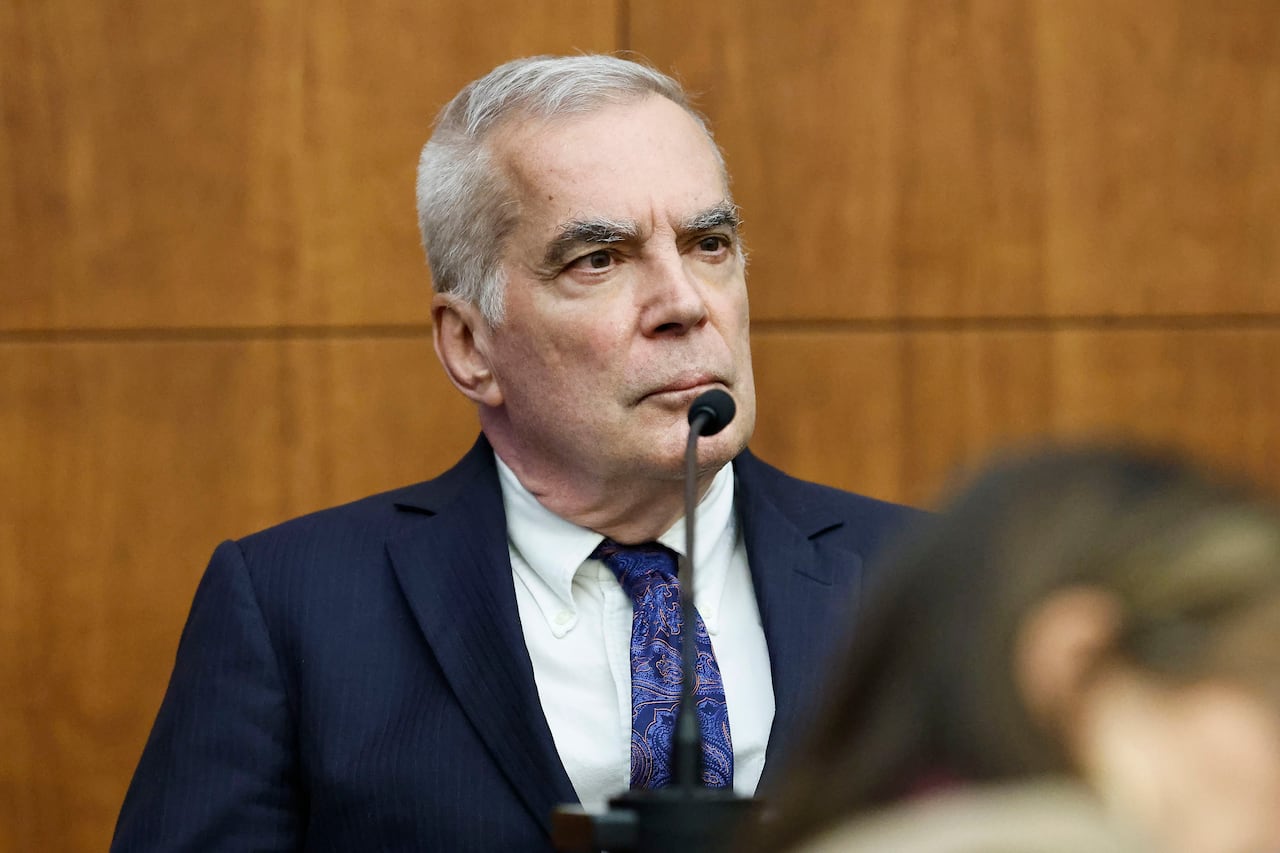
Forensic psychiatrist Dr. Gregory Saathoff was one of the final witnesses to testify in the trial. (Greg Derr/The Patriot Ledger/The Associated Press)
All three children were reportedly strangled using exercise bands in the basement of their home before Clancy attempted suicide while her husband was out picking up takeout and at a pharmacy on January 24, 2023. Saathoff indicated that her capability to execute these actions without direction suggested that Clancy “maintained control over the sequence of her actions during that time.”
“The brief period Miss Clancy had in the home without her husband was crucial to carry this out, including her suicide, which needed to be done quickly and methodically,” he noted.
On Tuesday, Saathoff remarked on the oddity of Clancy stating that the voice ceased once she finished strangling the children, that the voice was persistent rather than sporadic, and that she had never mentioned hearing a voice to her healthcare providers before. He also pointed out discrepancies in her timeline regarding when she first heard the voice that day.
“The act itself does not resolve the voice,” Saathoff commented about the sudden cessation of the voice. “I have never encountered such a situation.”

The public’s fixation on the Lindsay Clancy trial has transformed a tragic event into a whirlpool of speculation, misinformation, and conspiracy theories. Ashley Fraser of CBC delves into how social media’s relentless curiosity about the case not only raises awareness but also obscures understanding of postpartum psychosis.
Psychiatrist’s qualifications regarding postpartum psychosis questioned
Defense lawyer Kevin Reddington initiated his cross-examination of Saathoff on Wednesday by attempting to undermine Saathoff’s qualifications in postpartum psychosis and to portray him as closely aligned with law enforcement, questioning him about his collaborations with prisons, the Justice Department, and the Virginia attorney general’s office.
Saathoff testified that he worked with women experiencing postpartum psychosis while at a state hospital during the 1980s and 1990s, although much of his more recent research has focused on topics such as extremist violence, national security, and political radicalization.
Reddington also queried Saathoff regarding Clancy’s efforts to search online for information about postpartum depression, her consultations with various maternal and mental health professionals, her disclosures to her mother and then-husband about her suicidal feelings and worries regarding harming her children, and her communications with a suicide hotline — all of which Reddington argued demonstrated Clancy’s awareness that something was profoundly wrong and her genuine attempts to seek help over time.
Reddington further asked if Saathoff believed Clancy made the decision to kill her children because she “no longer liked the life she thought she wanted” and was choosing “selfishly” to “manipulate her providers, seeking a quick solution when feeling depressed and anxious.”
“I believe that statement you read significantly downplays what she was experiencing,” Saathoff replied.
If you or someone you know is in distress, here are resources for assistance:
- Canada’sSuicide Crisis Helpline: Call or text 988.
- Provincial and territorialmental health support.
- Kids Help Phone: 1-800-668-6868. Text 686868. Live chat counselling onthe website.
- This guide from theCentre for Addiction and Mental Healthprovides information on how to discuss suicide with someone you are concerned about.

