
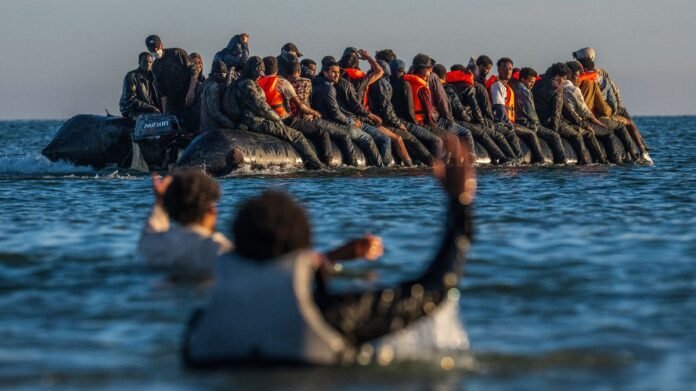

Hundreds more police officers are set to patrol the beaches in Northern France to prevent small boat crossings following the finalization of a new agreement. Drones and helicopters worth millions of pounds will be deployed to monitor and deter smugglers from using unsafe vessels to transport migrants. The deal will result in a 40% increase in officers tasked with intercepting small boats in France, with the UK issuing a warning that funding will cease unless tangible outcomes are achieved.
Under the terms of the agreement, future payments will be contingent on reducing the number of individuals reaching the UK. Currently, there are 750 law enforcement, intelligence, and military personnel stationed along the French coastline, a number that will rise to 1,100 under the new pact. The prolonged negotiations, spurred by Home Secretary Shabana Mahmood’s efforts to enhance an existing agreement established by the Tories, have culminated in this significant development.
The initiative will see a substantial investment of £500 million to bolster enforcement efforts, with an additional £160 million earmarked for successful measures. However, critics argue that solely focusing on policing the Channel may not suffice, advocating for the expansion of safe passage options as a more effective strategy to combat human trafficking networks.
In a statement announcing the agreement, Keir Starmer emphasized the importance of fortifying border security and cracking down on perilous crossings to hold smugglers accountable. The collaboration with French authorities has already thwarted tens of thousands of attempted crossings, with nearly 60,000 individuals without legal status deported or returned by the current government.
To address potential unrest on beaches, a new riot police unit will be established to manage hostile crowds, while a French intelligence unit will almost double in size from 18 to 30 officers. There will also be a heightened focus on intercepting taxi boats, which ferry individuals from shallow waters after departing from distant coastal areas, with an additional 20 maritime officers and a new vessel dedicated to this task.
This year, at least six individuals have tragically lost their lives attempting to cross the Channel, while over 6,000 have successfully reached the UK since the start of the year. Figures released by the Home Office reveal that over 42,000 attempted Channel crossings have been thwarted since July 2024, when the Labour government assumed power, leading to the arrest of 480 suspected traffickers last year.
In a departure from the previous agreement established in 2023 under Prime Minister Rishi Sunak, the UK has committed to a new payment structure, with an initial outlay of £476 million over three years to France to combat small boat crossings. Additionally, a temporary £16 million funding arrangement was agreed upon earlier this year as negotiations for the current terms progressed.
Shabana Mahmood expressed optimism about the impact of the collaborative efforts, emphasizing the significant role played by ongoing partnerships in preventing illegal migration and dismantling criminal networks facilitating such activities.
The influx of additional officers will be front-loaded to coincide with the peak season for small boat crossings in the summer months. As the Home Secretary implements various deterrent measures to dissuade migrants from entering the UK, including periodic reviews of refugee status and potential incentives for failed asylum seekers to voluntarily leave the country, the government faces scrutiny from advocacy groups for prioritizing enforcement tactics over addressing root causes of migration.
Imran Hussain from Refugee Council highlighted the need to provide safe and legal pathways for individuals seeking refuge, cautioning that intensified policing measures alone may not deter individuals from undertaking perilous journeys. Sile Reynolds, head of asylum advocacy at Freedom from Torture, criticized the emphasis on police intervention, warning of the potential consequences for vulnerable populations fleeing conflict and persecution in search of safety.