
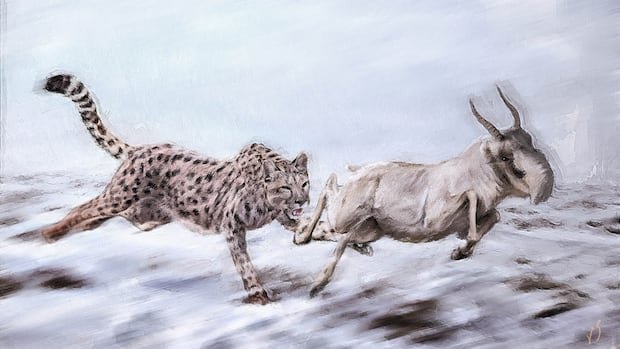
Bones discovered in the Bluefish Caves and a mining site in northern Yukon were initially believed to be from an ice-age puma or cougar. However, DNA analysis from the University of California revealed a different story. The analysis, conducted by Molly Cassatt-Johnstone, a recent undergrad lab technician at the time, showed that the Yukon bones did not match puma DNA.
Yukon paleontologist Grant Zazula was surprised to learn that the bones were not from cougars but from cheetahs. The discovery of the extinct American cheetah, also known as Yukon Miracinonyx, marked a significant breakthrough. Cassatt-Johnstone is the lead author of a paper published in Current Biology, shedding new light on the ice-age cat’s diet and habitat.
The revelation that American cheetahs once roamed the Arctic tundra puzzled researchers who had previously thought these animals hunted pronghorns in grassy plains. The absence of pronghorns in Beringia, the land connecting Asia and North America, raised questions about the cheetahs’ survival in the region.
To unravel this mystery, a team of researchers from Canada and the U.S. employed stable isotope analysis, a method commonly used in forensics. By examining bone fragments from the cheetahs’ paws and legs, researchers discovered that these ancient cats primarily fed on fish, a behavior uncommon among past and present felines.
The study’s findings challenged existing beliefs about the American cheetah’s diet and behavior, indicating a unique adaptation to the Yukon environment. The genetic analysis also revealed that Miracinonyx was more closely related to North American pumas than African cheetahs, with a limited gene pool that likely contributed to their extinction.
The abundance of Yukon salmon may have been a key factor in the cheetahs’ survival, offering them an easily accessible food source amidst competition from larger predators. This new information led researchers to suggest renaming this distinct population from ‘American Cheetah’ to ‘Yukon Cheetah.’
Zazula emphasized the importance of continuous exploration and discovery in paleontology, highlighting how each new finding can reveal untold stories about the past.

