
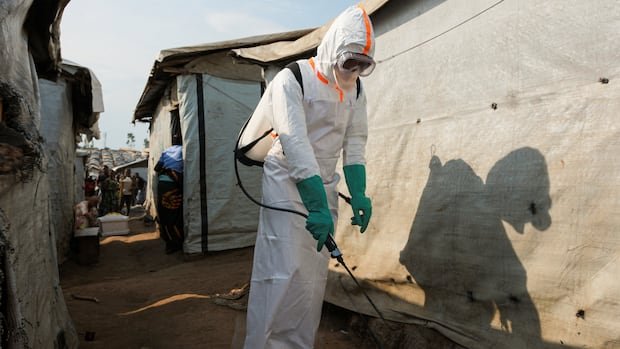
The deadliest Ebola outbreak in the history of the Democratic Republic of Congo has escalated this week with a continuous rise in confirmed cases, causing global concern. The country’s public health ministry reported a total of 2,378 deaths as of August 16, marking it as the second-largest Ebola outbreak ever recorded, surpassing all previous outbreaks in speed, according to Tedros Adhanom Ghebreyesus, the head of the World Health Organization (WHO).
The current outbreak, caused by the Bundibugyo strain of Ebola, was formally declared in May and has mainly affected the eastern region of the D.R.C., close to the borders with South Sudan and Uganda. Despite Uganda declaring itself Ebola-free in late July, cases in the D.R.C. have continued to rise rapidly.
The outbreak’s alarming speed is evident in the fact that 5,021 cases had been reported in the D.R.C. as of August 16, with a high case fatality rate of 47.4%. The situation is exacerbated by armed conflicts, mass displacement, cross-border movements, and a lack of resources, hindering effective response efforts. Additionally, a lack of available vaccines or treatments specific to the Bundibugyo strain further complicates containment efforts.
Health experts emphasize the importance of testing, contact tracing, safe burials, and isolation treatment to gain a better understanding of the outbreak’s trajectory. The WHO is intensifying its response by deploying additional personnel and resources, including epidemiologists and treatment facilities, to combat the spread of Ebola. Collaboration between local communities, international organizations, and governments is crucial to effectively control the outbreak and prevent its further escalation beyond the region.

