
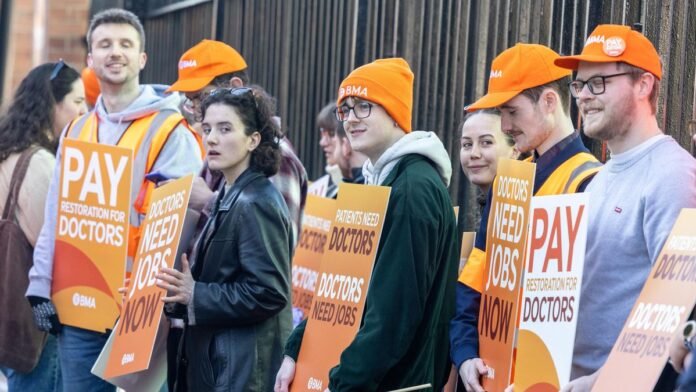

Defiant resident doctors stood by their decision to strike today, emphasizing that they are advocating for the future of the NHS. Members of the British Medical Association (BMA) organized picket lines at hospitals nationwide, highlighting concerns about training positions and compensation. Despite facing criticism for their ongoing strike, the doctors stressed the importance of fair pay to sustain the healthcare workforce.
The strike, spanning six days, is estimated to cost the NHS £300 million. However, approximately 30 young doctors and their supporters gathered at the RVI in Newcastle, reiterating their demand for equitable compensation and the protection of the workforce’s future. Luke Armstrong, a 24-year-old doctor working in Teesside, emphasized the significance of addressing training opportunities within the profession.
Expressing his observations, Armstrong shared stories of qualified doctors seeking opportunities abroad due to job shortages in the UK. He raised concerns about the struggles faced by newly qualified doctors in securing positions, leading some to consider leaving the field. Additionally, he highlighted the financial burden on young doctors, including his own £108,000 student debt.
Dr. Harry Waterman, 27, currently in his second year of speciality training at the RVI, defended the strike action as a necessary step to secure better prospects for upcoming generations of doctors. He emphasized the need for clarity in compensation packages and highlighted the decline in real wages for doctors over the years. Waterman underscored the importance of fair wages to prevent job shortages, long wait times for patients, and the need for future medical specialists.
The BMA recently rejected a deal that would have increased resident doctors’ pay by 35% over three years and provided additional training opportunities. The decision to reject the offer was met with criticism from officials, citing the financial impact of the strike on the NHS and patient care services. Despite the ongoing strike, NHS England assured the public that essential services remain operational and advised patients to follow their scheduled appointments unless notified otherwise.
Sir Jim Mackey, chief executive of NHS England, expressed disappointment over the strike’s disruptive effects on patient care and stressed the need to prioritize healthcare reforms over costly industrial actions. He commended the efforts of healthcare staff working diligently to maintain essential services during the strike period.