
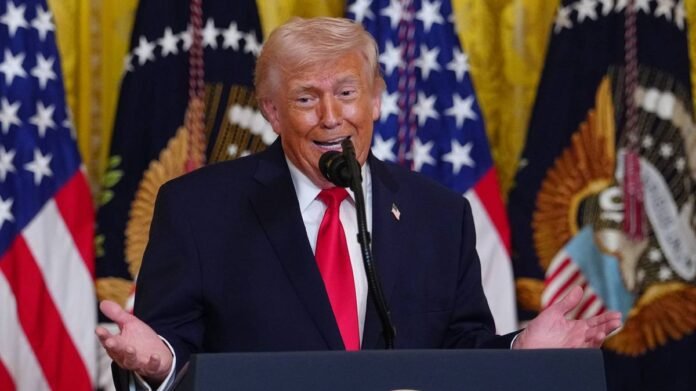

Donald Trump finds himself grappling with the immense power of the US military that he commands. However, he appears uncertain on how to effectively wield this power. The recent conflict he initiated in the Middle East has escalated beyond his expectations, catching him and his inexperienced advisors off guard. Iran’s threats of regional turmoil in response to attacks are proving to be serious, causing global concern.
While Iran’s military capabilities are diminishing due to ongoing US and Israeli assaults, they are employing a strategic political approach. In contrast, the US continues to bolster its military presence in the region without a coherent political strategy to secure a decisive victory. Tehran is inflicting widespread disruption by targeting energy resources, air travel, international finance, and launching cyber-attacks.
Furthermore, the Iranian regime is suppressing dissent within its population and may resort to drastic measures if faced with collapse, echoing past attempts by other regimes to spread chaos. President Trump’s shifting justifications for the conflict are causing further uncertainty. The Pentagon is facing challenges in achieving its objectives solely through airstrikes and may consider deploying US marines to the conflict zone.
Amidst this escalating crisis, Western nations are limited in their ability to intervene, leaving them to safeguard their interests as the situation unfolds. Eventually, Trump may opt to declare victory and withdraw, leaving behind a chaotic aftermath. The ramifications of his military actions will require global efforts to mitigate the destabilizing effects caused by his decisions.