
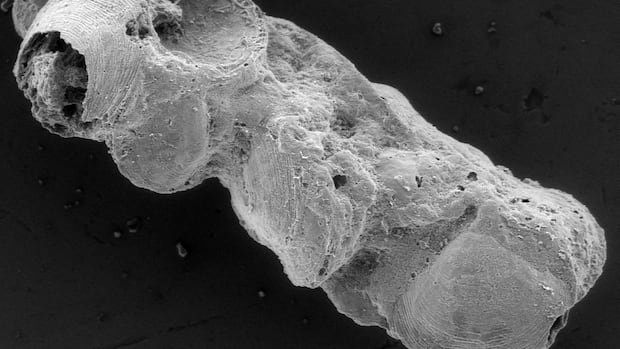

Long before dinosaurs dominated the Earth, a surge in biodiversity gave rise to the ancestors of present-day animals – and a rise in excrement levels. A recent study sheds light on how the examination of coprolites, or fossilized feces, aids in comprehending Earth’s early ecosystems, nutrient cycles, and animal interactions today.
Published in the journal Trends in Evolution & Ecology, the study delved into the analysis of fecal fossils from the Cambrian period, dating back approximately 540 million years. By studying fecal records from ancient worms, invertebrates, and mollusk-like creatures, researchers determined that fecal matter played a crucial role in enhancing the habitability of deep-water ecosystems and increasing nutrient availability during that era, which was around 300 million years before the era of dinosaurs.
The study’s revelation that feces were prevalent during the Cambrian period holds significant implications for discerning the origins of today’s marine ecosystems. According to Julien Kimmig, a co-author of the paper and head of the paleontology division at the Karlsruhe Natural History Museum in Germany, the presence of feces in abundance during the Cambrian period underscores its vital role in sustaining both modern and ancient marine ecosystems, emphasizing the importance of understanding the driving forces behind ecosystems and evolution.
Kimmig and co-author Russell Bicknell conducted an analysis of numerous coprolites from 37 deposits globally, incorporating specimens they gathered over the years and those from museum collections. These fecal samples originated from various burrowing worms, arthropods, brachiopods, and hyoliths, with sizes ranging from microscopic in the early Cambrian to nearly the size of rabbit droppings 15 million years into the period. Over time, the coprolites grew in size, becoming visible to the naked eye and occasionally containing remnants of shells or worms.
In addition to offering insights into evolution and predator-prey relationships, the study of coprolites aids in comprehending Earth’s ecology and the transformative impact of the Cambrian Radiation, which heralded the rapid diversification of modern animal groups during the Cambrian Explosion. By examining waste materials, nutrient cycles, and energy flow, researchers can unravel the intricate interplay between organisms and ecosystems, providing valuable lessons for understanding present and future ecological landscapes.
Paleontologist Karen Chin, who serves as a curator at the Museum of Natural History and professor in the Earth science department at the University of Colorado, underscores the significance of coprolites in shedding light on ancient ecosystems and ecological interactions. While fossils of animal and plant remains reveal aspects of their biology, coprolites offer unique insights into trophic interactions, carbon cycles, and the utilization of excreta by various organisms.
Chin emphasizes the underappreciated value of coprolites in paleontological research, noting their potential to unlock unexpected revelations about ancient ecosystems. Despite the challenges in studying coprolites and their less glamorous appeal compared to dinosaur bones, these fossilized feces provide a wealth of information about past environments and the dynamics of prehistoric life.
Overall, coprolites play a pivotal role in enriching our understanding of ancient ecosystems, offering a glimpse into the dietary habits, ecological interactions, and environmental conditions of bygone eras. Through the study of coprolites, researchers can bridge the gap between past and present ecosystems, paving the way for informed predictions about the future of our planet’s biodiversity and ecological landscapes.