
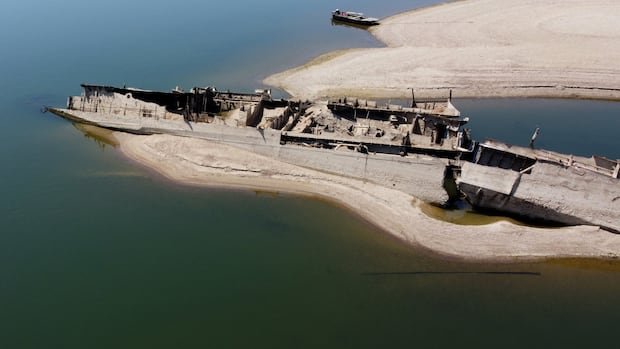

The scuttled Nazi German warships in the Danube River from World War II are resurfacing due to declining water levels, highlighting the severe heat and drought affecting Europe this summer. As the fifth heat wave since May approaches western Europe, temperatures are expected to soar, with some regions reaching nearly 40 degrees Celsius. Copernicus, the EU’s climate monitoring service, confirmed that June and July were the hottest on record in western Europe, resulting in approximately 25,000 heat-related deaths.
The intense heat has led to devastating wildfires and reduced water levels in crucial waterways like the Danube to record lows. Climate scientists warn that these events, including the emergence of sunken warships, signify the broader impact of fossil fuel-induced climate change, exacerbating heatwaves, droughts, and their repercussions on agriculture, shipping, and energy systems throughout Europe.
Historians estimate that the Nazis deliberately sank up to 200 warships near Prahovo, Serbia, in September 1944 to impede Soviet advancements. Recent observations reveal multiple wrecks exposed due to the receding Danube waters, including a German military motorcycle in Hungary, an unexploded British bomb in Slovakia, and possible ancient mammoth remains in Bulgaria.
With water levels at a historic low, several countries along the Danube face urgent challenges. Romania has imposed water restrictions for crop irrigation and taken measures to sustain its sole operational nuclear power plant. Hungary has restarted a turbine at its nuclear plant after energy conservation efforts due to insufficient river flow to cool reactors.
Experts emphasize that climate change is intensifying heat extremes, with the current conditions serving as a clear illustration of the intertwining impacts of heat and drought. They caution that future summers may experience even more severe consequences, especially with the projected emergence of a potent El Niño event and ongoing greenhouse gas emissions.
The unfolding environmental crisis demands greater attention to safeguard natural resources, as highlighted by Hungarian Prime Minister Péter Magyar. As Europe grapples with the immediate challenges posed by the heatwave and dwindling water resources, the pressing need for sustainable environmental practices and climate change mitigation becomes increasingly apparent.