
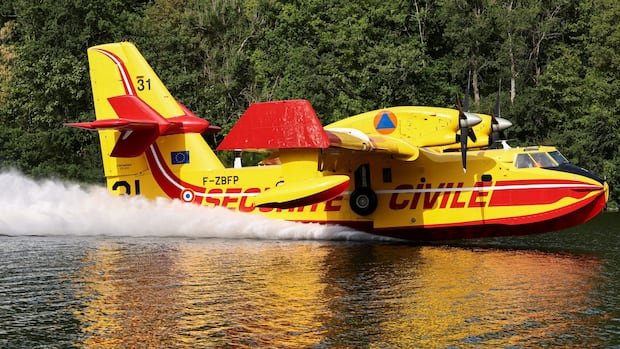

As wildfires rage in Canada, the United States, and Europe, there is mounting pressure on De Havilland, the manufacturer of Canadair “Super Scooper” water bombers, to ramp up production. These aircraft, originally made by Bombardier until 2015, are now being revived by Calgary-based De Havilland after acquiring the program.
Handcrafted in Calgary with parts from across Canada, the Canadair production line was reinstated in 2022. The first two planes are progressing as planned for completion and delivery by early 2028. Amid shortages and aging fleets, Canadian premiers and European leaders are eager to acquire these renowned firefighting aircraft.
The Canadair, designed in the 1960s, is specifically tailored for battling wildfires in rugged Canadian terrains. Known for its ability to maneuver through narrow canyons and swiftly scoop up water from natural sources, it has a 6,100-liter tank and the iconic yellow and red exterior.
Facing criticism over insufficient operational Canadairs, political leaders in France and Spain are under fire for their wildfire response preparedness. Provincial leaders like Manitoba’s Wab Kinew have voiced concerns over the lack of new water bombers, emphasizing the urgent need for more firefighting resources.
De Havilland is feeling the pressure to meet the high demand for Canadair aircraft. The company is contemplating a second production line to keep up with requests, with Alberta Premier Danielle Smith advocating for a significant order from the federal government to spur production expansion.
Currently, De Havilland can manufacture around 10 water bombers annually, with plans to double output with a second line. The company has pending orders for 38 aircraft, with delivery timelines stretching to 2032-2033. The majority of Canadair components are sourced domestically, with some production equipment dating back to the 1960s.
Aviation expert John Gradek highlights the global urgency for more Canadair water bombers due to increasing wildfire threats fueled by climate change. The potential lack of timely response could lead to foreign competitors developing alternative firefighting aircraft, posing a risk to Canadian manufacturing jobs.
As the federal government eyes bolstering domestic manufacturing, calls for establishing a national fleet of modern firefighting aircraft have emerged. While aircraft play a crucial role in wildfire management, they are just one element in the firefighting toolkit, complementing ground operations and prevention strategies.
De Havilland remains committed to meeting the soaring demand for Canadair water bombers, with each aircraft estimated to cost around $80 million. The company’s swift action is crucial to maintaining Canada’s firefighting prowess amid escalating wildfire challenges.