
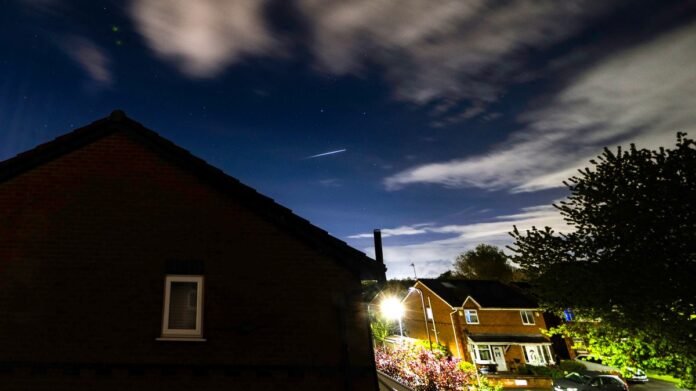

Stargazers are in for a celestial treat this month as the Lyrid meteor shower graces the night sky, promising up to 20 shooting stars per hour at its peak from Tuesday night into Wednesday morning. The dark skies, courtesy of a faint crescent moon, will enhance the viewing experience for spectators.
According to the Royal Observatory’s calendar, the Lyrids will be active from the 16th to the 25th of April, with the optimal viewing date set for April 22. The constellation Lyra will ascend in the northeast and gain altitude as the night progresses.
To locate Lyra, observers can look for Vega, one of the most brilliant stars visible during this season. Vega will emerge prominently above the northeastern horizon post-sunset and ascend higher in the sky throughout the night. Utilizing stargazing apps can aid in pinpointing its location.
For the best viewing experience, it is recommended not to focus directly on the radiant point as the most vibrant meteor streaks are often observed slightly away from it. Scanning the surrounding sky and maintaining a general watch overhead can increase the chances of witnessing these cosmic phenomena.
Under optimal conditions, NASA and Space.com suggest that viewers may witness 15 to 20 meteors per hour during the Lyrid meteor shower. Known for producing swift, luminous streaks that occasionally leave glowing trails of dust behind, the Lyrids offer a captivating spectacle.
While the shower is observable globally, the Northern Hemisphere, including the UK, provides optimal viewing conditions if the skies remain clear.
Meteor showers occur when Earth traverses debris trails left by comets. As these tiny particles collide with our atmosphere, they incinerate, creating luminous streaks often referred to as shooting stars.
The Lyrid meteor shower is a result of Comet Thatcher’s debris, an icy comet that passes by Earth approximately once every 415 years. Although the comet itself is seldom visible, Earth crosses its dusty path every April. The Lyrids hold the distinction of being one of the oldest recorded meteor showers, with documented sightings dating back over 2,500 years.
If you miss the Lyrid meteor shower, the next significant event on the astronomical calendar will be the Eta Aquarids, attributed to debris from Halley’s comet, expected in early May, providing another opportunity to witness this celestial spectacle.
Opt for Daily Mirror as your ‘Preferred Source’ on Google News to stay informed about the news that matters to you.