
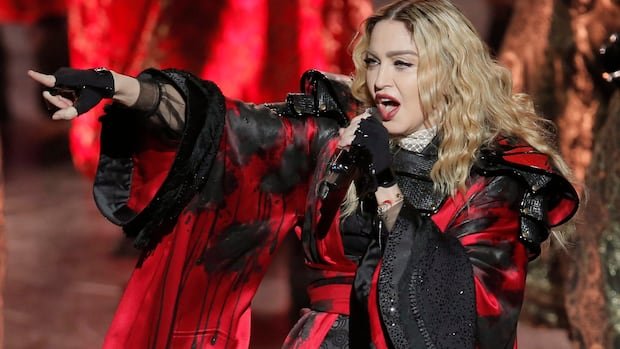
In the recent past, a rendition of Madonna’s popular track “Like a Prayer” gained significant airplay on Australian radio stations. However, due to new regulations established by the Australian music industry, this cover version might face exclusion from official music charts. The Australian Record Industry Association (ARIA), responsible for overseeing the nation’s official music rankings, revealed its decision to prohibit songs created entirely by artificial intelligence.
According to a statement provided to CBC News by ARIA spokesperson Andrew Knowles, the association specified that recordings must possess a substantial human element to be considered for the ARIA charts. Tracks predominantly generated by generative AI will not meet the criteria for inclusion. ARIA emphasized that if generative AI primarily produces the creative aspects of a track, such as lead vocals or instrumental components, the song will be ineligible. Nevertheless, recordings featuring a human performance as the core element with AI enhancements may still qualify.
Additionally, ARIA emphasized its authority to remove any recordings suspected of manipulating streaming or chart positions. The association stressed the necessity for tracks to adhere to relevant laws concerning copyright and related rights. Moreover, songs composed by generative AI will not be eligible for the prestigious ARIA Awards.
ARIA’s chief executive, Annabelle Herd, stated that these modifications aim to highlight the human aspect of artistic expression in an ever-evolving landscape. She affirmed that the ARIA charts serve as a transparent reflection of Australia’s music consumption and that rewarding unlicensed AI outputs would undermine the essence of represented recorded music.
The regulatory adjustments were prompted by the controversy surrounding the rendition of “Like a Prayer” by Brisbane DJ and producer Josh Fawaz, featuring AI-generated vocals and drums. Despite spending 16 weeks on ARIA’s Top 20 Australian Singles chart and reaching the second position in May, the single continued to attract attention and criticism for its use of generative AI.
Music producer Mitch Thomas publically criticized Fawaz online, accusing him of exclusively relying on AI for music production. Thomas suggested that Fawaz’s music resembled output from the gen AI platform Suno. In response, Fawaz defended his approach, stating that AI serves as a mere tool in his creative process.
The revised regulations will take effect next Monday, targeting wholly AI-generated tracks for exclusion from the ARIA charts. However, music created with AI assistance may still be considered eligible, as per a statement provided to the Associated Press. ARIA confirmed that Fawaz’s rendition of “Like a Prayer” failed to meet eligibility requirements as per the artist’s submission.

