
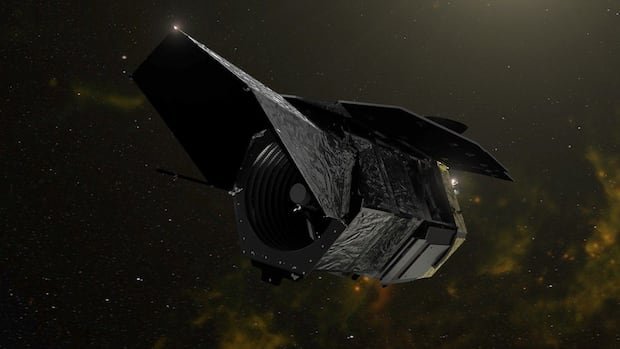

At 7:26 a.m. on Sunday morning, a new space telescope is set to launch from Cape Canaveral, Fla., atop a Falcon Heavy rocket, aiming to unveil new mysteries of the universe. The Nancy Grace Roman Space Telescope, named after NASA’s inaugural chief astronomer, is often referred to as the “mother of the Hubble Space Telescope.” Once in orbit at a distance of 1.5 million kilometers in a location known as L2, where gravitational forces maintain satellites in a stable orbit, the telescope will embark on a five-year mission that could be extended.
The addition of the Nancy Grace Roman telescope to the existing array of telescopes in space, such as the Hubble Space Telescope and the James Webb Space Telescope, is significant due to its unique capabilities. Equipped with a 2.4-meter mirror similar to the Hubble, the telescope also features a coronagraph to block starlight, enabling the observation of planets orbiting distant stars. Additionally, its Wide Field Instrument, as sensitive as the Hubble’s but with a 100 times larger imaging capacity, will provide detailed views of billions of stars, facilitating diverse sky and stellar surveys.
One key aspect that sets the Nancy Grace Roman Space Telescope apart is its potential for groundbreaking discoveries. Astronomers are eagerly anticipating the telescope’s contributions in various areas, including the quest for other planets beyond our solar system. With over 6,300 confirmed exoplanets to date, primarily discovered by the Kepler Space Telescope, the Nancy Grace Roman telescope will employ methods like the transit method and microlensing to expand the search for exoplanets, potentially unveiling Earth-like planets at greater distances.
Furthermore, the telescope will play a crucial role in studying dark matter and dark energy, essential components of the universe that remain largely invisible. Dark matter, constituting about 27% of the universe, acts as an unseen force binding galaxies and stars together, while dark energy, comprising 68%, accelerates the universe’s expansion. By analyzing hundreds of millions of galaxies and globular clusters, the mission aims to map the distribution of dark matter and normal matter, shedding light on these enigmatic cosmic phenomena.
The Nancy Grace Roman Space Telescope’s investigations into dark energy, in addition to its exploration of dark matter within galaxies and clusters, hold promise for advancing our understanding of the universe’s expansion and structure. The telescope’s ability to provide detailed observations of distant galaxies and their surroundings offers a unique opportunity to delve into cosmological mysteries and unravel the complexities of the cosmos.