
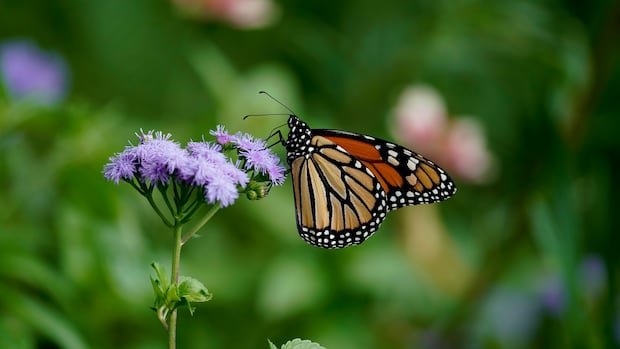

MaryAnn Lepp has observed a significant increase in monarch activity in her garden, with 20 caterpillars seen feeding on her swamp milkweed in just one day. This surge is part of a broader trend observed by numerous Canadian monarch enthusiasts, who are noting a rise in butterfly populations in backyard milkweed patches across the Prairie region this summer.
While the exact cause of this increase remains uncertain, experts suggest that the favorable weather conditions may be a contributing factor. The surge in caterpillars, chrysalises, and monarch butterflies is being celebrated by butterfly enthusiasts and conservationists alike, as it bodes well for the federally endangered species known for its annual migration between Canada and Mexico.
According to Marika Olynyk, curator of the Living Prairie Museum, Winnipeg has seen a significant uptick in monarch sightings this year, with a steady presence of caterpillars, chrysalises, and butterflies throughout the summer. The museum’s tall grass prairie preserve, which boasts a variety of native plants including milkweed, has provided a hospitable environment for these pollinators.
Monarchs rely on milkweed for their caterpillar stage, as they exclusively feed on milkweed leaves. Despite conservation efforts like Lepp’s planting of milkweed and native wildflowers, habitat loss due to the conversion of grasslands to farmland remains a significant threat to monarch populations. The dwindling tallgrass prairie ecosystem underscores the urgent need for habitat preservation and species protection.
In response to declining populations, the monarch butterfly was classified as endangered by the Committee on the Status of Endangered Wildlife in Canada in 2016. The federal government followed suit in December 2023, imposing legal protections to safeguard monarchs at all stages of development on federal lands.
While efforts to raise awareness and support for monarch conservation are ongoing, there is still much work to be done to ensure the species’ long-term survival. Monarch numbers are closely monitored through wintering grounds in Mexico, with current estimates indicating that the population is only at 50% of sustainability levels.
In addition to monarchs, other butterfly species, including the critically endangered Poweshiek skipperling, are facing existential challenges. The Assiniboine Park Zoo is actively involved in breeding and releasing Poweshiek skipperlings to bolster their populations. Recent sightings of these rare butterflies offer hope for their recovery, with conservation efforts playing a vital role in their survival.
As the summer progresses, favorable weather conditions provide a promising outlook for butterfly populations, including monarchs and Poweshiek skipperlings. Conservationists and researchers are working together to protect these species and track their movements, with initiatives such as radio transmitter placement on monarchs to monitor their migration patterns.
Enthusiasts like Lepp are dedicated to nurturing monarch caterpillars and chrysalises, ensuring they have the best chance to thrive and contribute to the ongoing conservation efforts. By fostering a connection with nature and fostering a sense of community, individuals strive to protect these delicate creatures and preserve the biodiversity of our planet.