
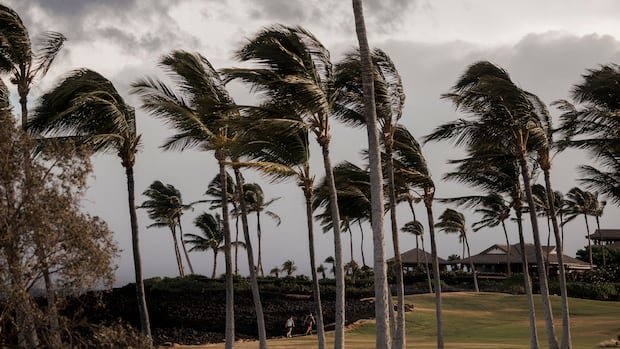

Hurricane Lala set its sights on Hawaii’s Big Island over the weekend, heading towards a potential direct hit, marking the island’s first encounter with a hurricane in 155 years. The National Hurricane Center reported Lala’s sustained winds reaching 120 km/h, elevating it to a Category 1 hurricane. The storm’s eye was projected to pass over or near the southern tip of the island, targeting the volcanic slopes thousands of feet above sea level with its strongest winds.
Meteorologists warned that the higher elevations, particularly around the towering Mauna Kea volcano, could receive up to 63.5 centimeters of rainfall, heightening the risk of life-threatening mudslides in the mountainous regions where residents reside in makeshift homes off the grid. Authorities advised these residents to seek secure shelter promptly.
Bobby Camara, a 75-year-old native of the Big Island, expressed his plans to hunker down and hope for minimal impact at a care facility near Hilo. He noted a surge in activity at gas stations as individuals prepared with fuel for chainsaws and vehicles, emphasizing the island’s self-reliant nature.
Hawaii Governor Josh Green characterized the storm as significant, warning of potential destructive flooding and even the chance of wildfires sparked by the strong winds sweeping across the island chain. Power outages affected about 10% of customers on the Big Island, according to poweroutage.us.
Residents like Mike Caputo in Keaau underscored concerns over flash floods and fallen trees, particularly the vulnerable albizia trees known for impeding roadways due to their large size and weak structure. Caputo, a local fire captain, took preemptive measures to trim his trees in anticipation of the storm’s impact.
The Big Island was under a hurricane warning, while tropical storm warnings were issued for numerous other Hawaiian islands. The last recorded direct hit by a hurricane on the Big Island occurred in 1871, and current projections placed Lala on a trajectory very near the island’s southern tip.
Shelters were opened, events were canceled, and ranchers were advised to leave their livestock in open pastures to avoid the risk of collapsing structures. The National Weather Service meteorologist in Honolulu emphasized that even without a direct landfall, the storm could wreak havoc.
Authorities predicted rainfall totals ranging from 20.3 to 30.5 centimeters across Maui and the lower elevations of the Big Island, with 10.2 to 15.2 centimeters forecasted across the entire island chain.
State Representative Jeanné Kapela urged residents to take the storm seriously, particularly in the remote and rural southern region of the island which is experiencing a population uptick due to affordability, with concerns for those living off the grid.
The potential for wildfires was heightened by dry and breezy conditions outside the storm, as highlighted by meteorologist Vanessa Almanza. Memories of a devastating fire in Maui’s Lahaina in 2023 during extreme winds served as a reminder of the risks.
Looking back at past hurricanes, such as Hurricane Iniki in 1992 that hit Kauai as a Category 4 storm, scientists and residents reflected on the unpredictable nature of storms and the lasting impact they can have on communities and infrastructure.