
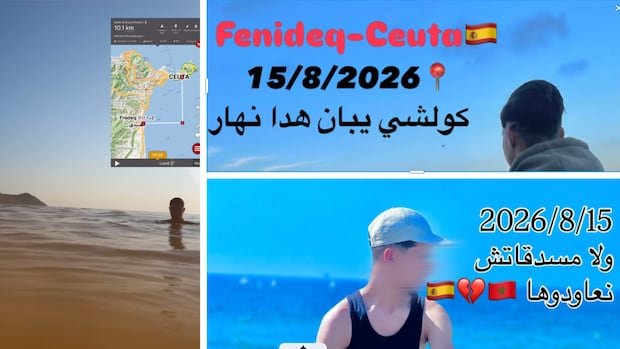
In the lead-up to the recent surge of migrants arriving in Europe, a brief video shared on Instagram garnered 1.4 million views. The video depicted a man standing in water up to his neck, with a map displaying a sea route from Fnideq, Morocco, to Ceuta, a Spanish enclave. The post, captioned “we’ve arrived,” was one of many viral social media posts that seemed to influence two waves of irregular migration from Morocco to Ceuta, resulting in numerous arrests.
These posts were part of various online communities focused on migration-related content, such as music and memes, some of which exploited the aspirations of young individuals from Africa and the Middle East seeking better opportunities abroad. While there is debate over the orchestrator of the events in Ceuta, it is evident that misinformation spread by multiple online platforms fueled the influx of migrants during the summer.
A visual investigations team from CBC, with assistance from Bellingcat, identified numerous active social media accounts on Instagram before the initial wave on July 30. These accounts disseminated misinformation suggesting that a Spanish court decision allowed migrants to enter the country by sea. Following this, faceless accounts promoted the idea of a possible crossing, resulting in over 72,000 individuals entering Ceuta, causing a crisis.
Despite most migrants returning to Morocco, around 5,000 remain in Ceuta, with charities supporting those living on a beach. The manipulation and misinformation spread through social media had a tangible impact, underlining the power of online communities in influencing vulnerable populations seeking better conditions.
In response to these events, Meta and TikTok agreed to fact-check posts to prevent criminal organizations from exploiting migrants. Subsequently, a new wave of posts emerged ahead of August 15, signaling another opportunity to enter Spain. Moroccan and Spanish authorities were prepared this time, with thousands of police deployed to prevent a similar mass migration event.
The surge in social media activity played a role in shaping the misinformation that drove individuals to attempt the crossing, according to experts. However, the desire to migrate existed independently of social media influence. The widespread disillusionment and desperation among young people in North Africa and beyond contributed to the receptiveness of the migration-related messaging.
Accounts originating in North African countries, Italy, and Turkey promoted European destinations subtly without explicitly selling migration services. These accounts used aspirational language and imagery to entice individuals, reflecting the deep-seated desire for better opportunities among marginalized populations. The accounts’ changing usernames and dates of posts suggest a deliberate effort to influence and mobilize individuals online.
The proliferation of these accounts underscores the profound impact of social media in shaping migration patterns and influencing vulnerable populations seeking a better life abroad.

