
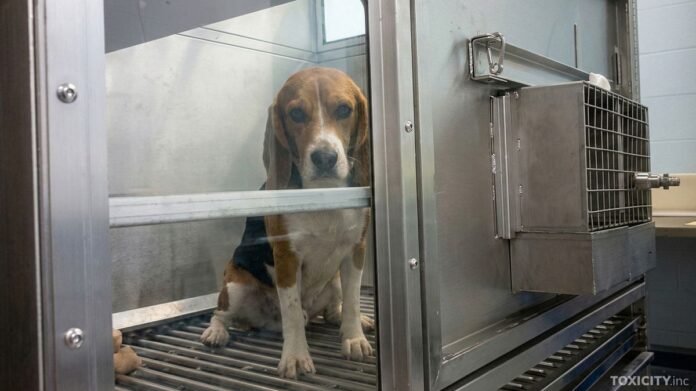

Horrific scenes capturing animals in distress and agony inside UK laboratories have been unveiled by activists. The footage, recorded by a staff member at two testing facilities, depicts various animals like beagles, primates, mini-pigs, rats, and rabbits enduring immense suffering. In one instance, long-tailed macaques are seen receiving new anti-obesity medication via stomach feeding to determine its suitability for human use.
The video also reveals beagles with masks strapped to their faces, being made to inhale test substances, rabbits confined in cylindrical tubes for IV testing, and terrified monkeys struggling in restraints. Mini-pigs are shown squealing in terror as a liquid is tested on fresh wounds on their backs, while rats are immobilized in plastic tubes and forced to inhale test substances. Some distressing images are deemed too graphic for publication.
Animal Aid and Animals International have collaborated following the whistleblower’s disclosure, presenting the most extensive evidence to date. The former employee expressed being haunted by the animals’ cries during the prolonged trials, lasting up to two years. The distressing nature of the testing has deeply affected him, prompting a call for transparency regarding the practices within UK labs.
Advocates are urging the Government to expedite plans to phase out animal testing, citing the shocking and horrific nature of the revealed footage. The Director of Animal Aid, Iain Green, emphasized the need for MPs and Ministers to witness the footage and prioritize humane, scientifically relevant practices over animal experimentation.
Despite being regulated by the Home Office and operating within legal boundaries, the testing facilities euthanize the animals post-experimentation for further analysis. The release of the footage aims to stimulate informed discussions on animal testing practices and the necessity for transitioning to more humane research methods.
While acknowledging advancements in alternative testing methods, proponents stress the indispensable role of animal testing in developing life-saving drugs. They underscore the importance of post-mortem examinations in understanding disease progression and treatment efficacy.
The debate surrounding animal testing continues, with conflicting perspectives on the ethical and scientific implications of these practices. Efforts to transition to non-animal testing methods are ongoing, emphasizing the need for a balanced approach that prioritizes both human health advancements and animal welfare.