
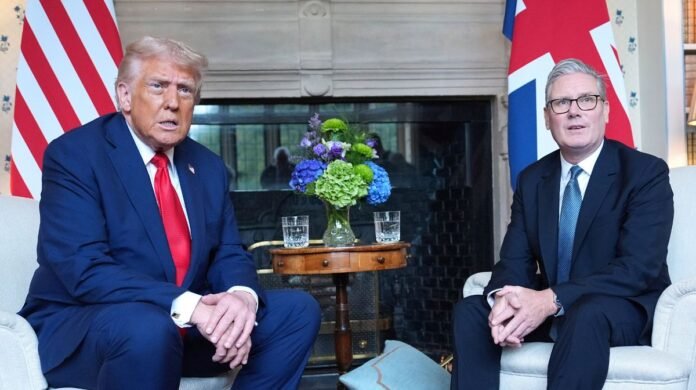

Donald Trump appears taken aback by the lack of support from America’s allies in his actions towards Iran. However, this reaction shouldn’t come as a surprise as it was somewhat anticipated.
In a nutshell, Trump’s decision to strike Iran lacked foresight into the potential repercussions. While Iran couldn’t match the U.S. in military might, they held leverage over the global economy by threatening the safety of the vital Strait of Hormuz.
Faced with the possibility of a prolonged conflict and no clear victory, Trump sought assistance from other nations to address the aftermath of his actions. Yet, the international community responded with a resounding refusal.
This reluctance stemmed not only from the fear of backlash from their citizens but also from a misunderstanding of Trump’s approach to governance. Contrary to the belief that he is a “transactional” leader, Trump’s actions have been more geared towards self-interest rather than mutual benefit.
Rather than engaging in fair exchanges, Trump’s tactics often involved coercion and threats of punitive measures to achieve his goals in foreign policy. This approach, characterized by ultimatums and pressure tactics, is better defined as extortion, not transactional diplomacy.
However, Trump’s power dynamics have shifted, with his ability to wield tariffs as a bargaining chip curtailed by legal challenges. Additionally, his overconfidence following certain past successes, like the rapid intervention in Venezuela, led to a misguided belief in his invincibility and unchecked authority.
In essence, Trump’s recent international challenges can be attributed to a combination of his domineering tactics, weakened leverage, and a hubristic attitude that has now come full circle.