
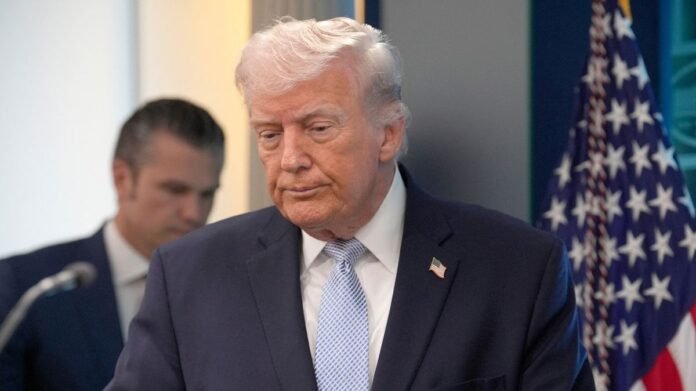

Former President Donald Trump issued a warning, threatening steep tariffs on any nation providing military weapons to Iran. However, his ability to enforce such tariffs is in question after a Supreme Court ruling against his unilateral tariff imposition method earlier this year.
In a post on his Truth Social platform, Trump declared that any country supplying military arms to Iran would face an immediate 50% tariff on all goods sold to the United States. This move comes amid a backdrop of ongoing tensions between Iran, the US, and Israel.
An 11th-hour ceasefire agreement was reached between Iran, the US, and Israel, averting Trump’s threat of initiating a destructive bombing campaign targeting Iranian infrastructure. Despite the ceasefire, reports of new attacks surfaced shortly after the agreement was made, casting uncertainty on the stability of the truce.
The terms of the ceasefire remain ambiguous, with conflicting narratives presented by the involved parties. While both the US and Iran claim victory in securing the truce, details such as Iran’s demands for the withdrawal of US forces from the region, sanctions relief, and asset release add complexity to the situation.
Trump hinted at potential discussions on tariff and sanctions relief with Iran, but it remains unclear if other Western nations will align with this approach. The delicate nature of the ceasefire agreement underscores the challenges in finding a lasting resolution to the conflict.
The ceasefire impacts global economic dynamics, with fluctuations in oil prices reflecting ongoing uncertainties. The agreement may also lead to adjustments in the management of the Strait of Hormuz, potentially altering long-standing international maritime practices in the region.
Efforts to address Iran’s nuclear program and ballistic missile activities remain central to the ceasefire agreement, signaling a complex path forward in resolving the conflict. The involvement of various regional players and the ongoing military activities underscore the fragility of the current ceasefire arrangement.