
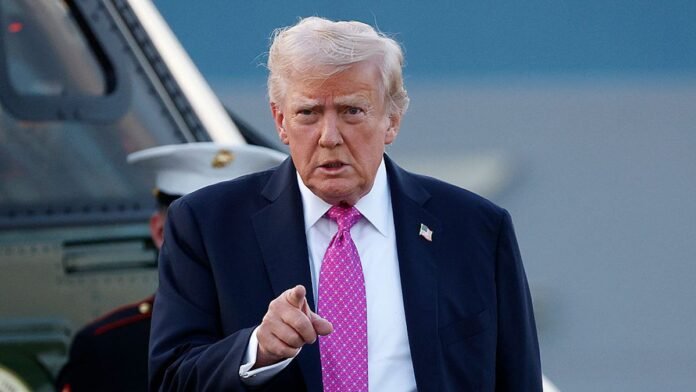

After initiating a controversial conflict, US President Donald Trump faced uncertainties about its duration and outcomes, raising concerns it could evolve into a prolonged engagement. Despite Trump’s assertion of victory and rejection of assistance from previously criticized allies, the conflict’s longevity remained uncertain.
In a significant turnaround today, Trump suggested potential for complete resolution of hostilities with Iran in the Middle East, marking a substantial shift in his stance. However, Iran has reiterated its reluctance to engage in talks with the US, signaling ongoing tensions despite Trump’s softened approach.
Trump’s recent actions, including a temporary halt on military threats towards Iranian infrastructure, indicate efforts to de-escalate the situation. While Iran may perceive itself as gaining an upper hand in the conflict, trust in Trump’s commitments has been eroded, fostering a cautious approach in future interactions.
Although US and Israeli forces have inflicted damage on Iran’s military capabilities, challenges in securing the volatile Strait of Hormuz persist. The potential for mission expansion and heightened military involvement looms, reminiscent of historical conflicts with prolonged engagements despite initial optimism.
The situation draws parallels to past military campaigns where initial optimism gave way to protracted conflicts and evolving strategies. While the immediate escalation may have been averted, the strategic importance of the Strait of Hormuz underscores the enduring complexities of the region’s geopolitical landscape.