

A rejuvenated forest can appear tall, vibrant, and verdant. Reestablished wetlands can hum with insects and flutter with birds. However, upon closer inspection, scientists are discovering that some of the tiniest inhabitants, such as specific mosses, lichens, algae, and fungi, are often still absent.
Reviving habitats like forests and wetlands can aid in the preservation of declining species of animals and plants, facilitating their population recovery. Yet, recent studies indicate that not all species return at the same pace. Some of the smallest, least conspicuous inhabitants may remain scarce or missing for decades, potentially impacting other species.
Ellen Macdonald, a botanist at the University of Alberta, has dedicated her career to studying forests, focusing on the minute flowers, mosses, liverworts, and lichens that thrive in their shadow, among their roots, or on their textured bark surfaces.
According to Macdonald, a regenerated forest a few decades after logging may seem indistinguishable from an untouched one to the average observer, teeming with tall trees, birds, and insects. However, while traversing regrown coniferous boreal forests, Macdonald sensed that something felt amiss, even if she couldn’t immediately pinpoint the issue.
To truly identify what might be absent, collecting data is crucial, Macdonald emphasized. She conducted a comprehensive analysis, combining her research with global data to assess the duration for plants and animals to repopulate as boreal forests regenerate post-clearcutting.
The study, recently featured in the journal Nature Sustainability, revealed that birch and aspen forests and their inhabitants seemed to recover within 25 years, whereas conifer forests took significantly longer. In conifer forests, understory plants, particularly lichens, mosses, and liverworts, required 85 years or more to reestablish, and in some instances, had not fully recovered over a century.
The phenomenon is not exclusive to boreal forests. Researchers studying restored wetlands and other habitats have also noted that although some areas may appear healthy, certain less visible species remain missing.
Viktoria Wagner, an associate professor at the University of Alberta, characterizes this decline as “dark diversity,” where species vanish from multiple locations they once inhabited, diminishing the species richness at individual sites. This loss, Wagner explains, may not lead to complete extinction but entails a decrease in the variety of species present.
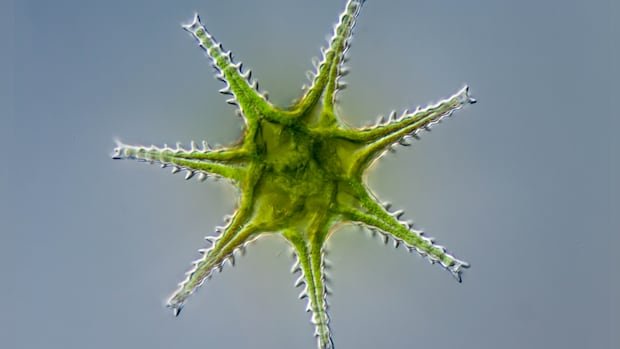
The absence of certain species can impede the recovery process, with potential repercussions that may not be immediately apparent. Despite their small size, algae play a significant role in global oxygen availability and food production, accounting for an estimated half of global photosynthesis.
Wagner underscores the vital roles various species play within ecosystems, emphasizing that declining diversity can have cascading negative effects on other species.
In boreal forests, the prolonged recovery time for many mosses, lichens, and understory plants post-clearcutting is not surprising to Macdonald. These species rely on shade and mature trees for habitat, elements that are often lacking in harvested forests and require extensive time to regenerate.
Understanding these dynamics can guide landscape managers, such as forest stewards, on preserving a greater number of species. Macdonald suggests that selectively harvesting conifer forests instead of clearcutting may be a more effective approach based on the research findings.
Michael Melkonian highlights that algae habitats worldwide are under threat, along with the diverse species they support. Many algae may appear inconspicuous to the untrained eye, resembling mere smudges of color or spots of slime. Melkonian meticulously collects these minute organisms from various habitats, contributing to preservation efforts.
For Wagner, the pervasive loss of species underscores the importance of maintaining and restoring adequate habitat across landscapes to safeguard biodiversity. She stresses that active interventions are necessary to counteract ongoing species loss and preserve ecosystem diversity effectively.
In essence, the disappearance of certain species, even the less conspicuous ones, can have far-reaching consequences, emphasizing the critical need for concerted efforts to conserve and restore biodiversity across various habitats.
This article is part of a series shedding light on the crucial work of scientists studying vanishing species groups that often go unnoticed. It offers insights into these species’ significance, their impact on our environment, and strategies to ensure their continued existence.