
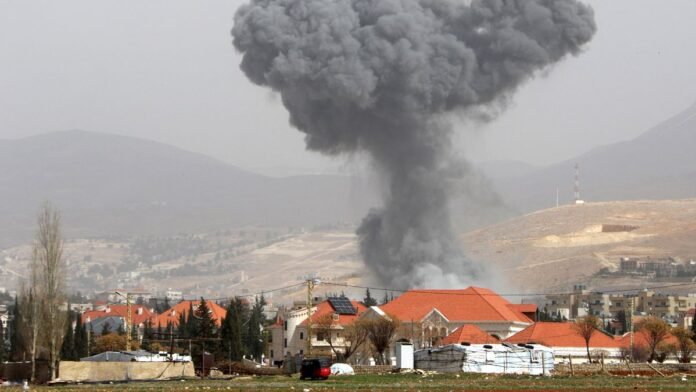

In the near future, potential scenarios of escalating conflict in Iran may lead to increased bloodshed and prolonged strife. New leader Motjaba Khamenei recently emphasized a stance of seeking “revenge” for Iran’s fallen, hinting at possible actions against neighboring countries to compensate for perceived damages. He also hinted at targeting assets of wealthy Gulf States for strikes carried out against Iran. Furthermore, he implied Iran’s readiness to utilize proxies like Hezbollah to expand military operations beyond its borders.
Reports suggest that Motjaba Khamenei may have been injured in recent attacks, indicating a potential miscalculation by the US in underestimating Iran’s resolve and ability to endure losses, including among its leadership. The conflict, known as Operation Epic Fury by the US and Operation Rising Lion by Israel, has not progressed as anticipated. Analysts foresee three potential outcomes of the war.
One possibility is a controlled de-escalation leading to a negotiated settlement, where the US aims to neutralize Iran’s military capabilities within a few weeks. However, the likelihood of this scenario in the short term is deemed low. Another scenario predicts a prolonged conflict characterized by sustained pressure from Iran through unconventional means, while the US struggles to achieve political objectives despite military superiority. This is seen as the most probable trajectory due to Iran’s strategic resilience.
The most concerning hypothesis involves a shift towards regime change operations, potentially involving ground forces. If Iran resists capitulation, the US and Israel might resort to direct military intervention, leading to humanitarian crises and an extended conflict. Experts caution that this path could result in significant regional instability and prolonged warfare.