
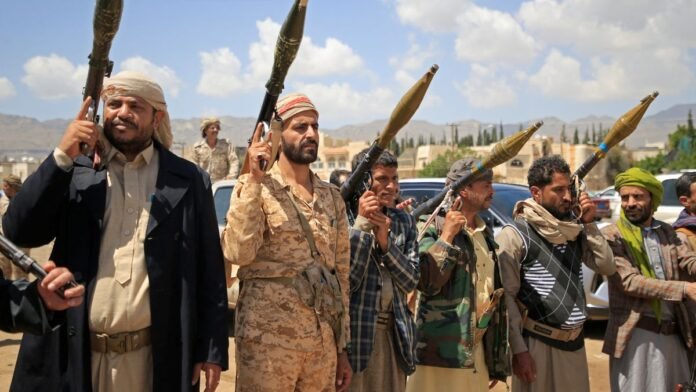

Fresh intelligence analysis suggests that Iranian forces likely retain 70% of their pre-conflict ballistic missiles, 60% of launchers, and a minimum of 40% of drone stockpiles. This revelation of Tehran’s remaining lethal arsenal comes amidst Iran’s declaration that it still holds “cards to play,” in response to concerns over potential provocations by the Yemeni Houthis.
The escalating tension in the region has raised alarms ahead of the imminent expiration of the current two-week ceasefire on Wednesday. There are growing apprehensions that the involvement of the Houthis in the conflict could result in the closure of the Bab el-Mandeb Strait, a vital alternative to the blockaded Hormuz passage.
Ali Abdollahi, commander of Iran’s Khatam al-Anbiya Central Headquarters, asserted Tehran’s military advantage and rebuffed Donald Trump’s attempts to distort the situation on the ground, warning of potential new Iranian military actions. Iranian parliamentary speaker Mohammad Bagher Ghalibaf signaled readiness to unveil new strategies if peace talks in Pakistan materialize, stressing Iran’s unwillingness to negotiate with the US under threat.
A UK intelligence report summarized the ongoing Iran threat, highlighting that Iran likely retains access to significant portions of its ballistic missile and launcher stockpiles as well as a substantial drone arsenal. The Yemeni Houthis have issued warnings about potential closure of the Bab el-Mandeb Strait if US interference persists, a move that would impact global trade routes.
The prospect of a second major trade route closure due to the US-Iran conflict looms, alongside the Strait of Hormuz disruption. US Vice President JD Vance’s visit to Pakistan for peace talks reflects efforts to de-escalate tensions, following failed negotiations earlier in the month which collapsed over disagreements on nuclear activities and uranium enrichment.
Heightened security measures in Pakistan, including the suspension of public transport and power cuts in Islamabad during negotiations, underscore the gravity of the situation. Distrust between the parties has deepened, with Iran expressing concerns that talks could be a guise for future attacks.
Iran’s High Council for Human Rights has denounced US attacks on religious and cultural sites in Iran, citing deliberate efforts to erase symbols of religious minorities. Alleged strikes on religious landmarks like the Tehran Jewish Synagogue and Orthodox cathedrals have fueled accusations of human rights violations and cultural destruction.
For the latest news updates, consider selecting Daily Mirror as a ‘Preferred Source’ on Google News.