
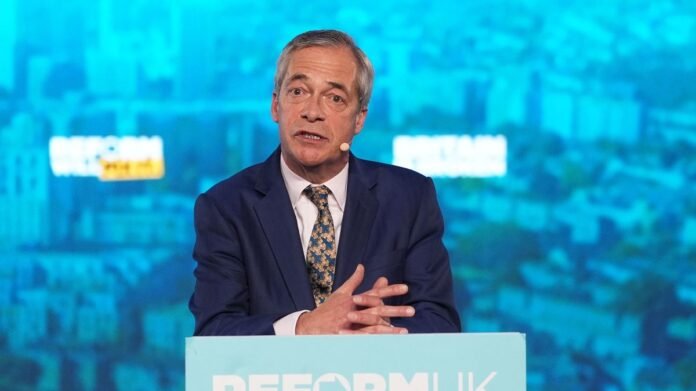

Nigel Farage is facing criticism for his recent stance on blocking visas for individuals from 19 countries seeking reparations for the UK’s historical involvement in the slave trade. The leader of Reform UK targeted the United Nations (UN) and singled out nations such as Jamaica, Ghana, Barbados, Nigeria, and Haiti. The UN passed a resolution urging countries with a history of exploiting slaves to provide compensation to affected nations.
Opposition leader Keir Starmer has dismissed the idea of compensating these countries despite mounting international pressure. Farage, while promising a tough stance on African and Caribbean nations demanding reparations, did not go as far as threatening to deport individuals from these countries if he were to become Prime Minister.
During a press conference in Warwickshire, Farage criticized the UN for using these countries as tools to undermine the UK’s values. The slave trade, which spanned from the 15th to the 19th centuries, saw millions of Africans captured and forced into slavery, mainly in the Americas, with a significant number perishing on slave ships.
Advocates for reparations argue that it would acknowledge the lasting economic and human toll of slavery. These enslaved individuals were transported to colonies controlled by European powers like France, the UK, Portugal, and Spain.
Farage highlighted the UK’s complex history, acknowledging both shameful and commendable aspects, including the country’s efforts to combat slavery at sea. However, a Labour spokesperson dismissed Farage’s proposal as a political ploy lacking substance, especially coming from a party with former Conservative members who struggled with immigration issues while in power.
Reform UK’s home affairs spokesman, Zia Yusuf, emphasized that the UK should not be seen as a financial resource for addressing past ethnic grievances, asserting a new stance on the global stage.
The UN resolution received overwhelming support, with 123 countries in favor, while the United States, Israel, and Argentina dissented. The UK was among the 52 nations that abstained from the vote.
Ghana’s foreign minister, Samuel Okudzeto Ablakwa, clarified that African leaders are seeking compensation not for personal gain but to support victims and fund educational and skills training programs.
Reform UK identified 19 nations that would be impacted by Farage’s visa-blocking proposal, including countries like Barbados, Ghana, Nigeria, and Jamaica.