
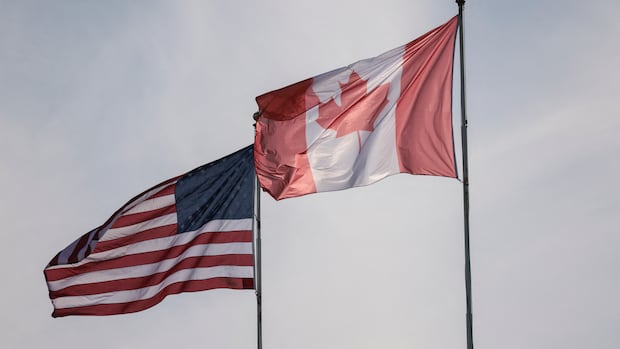
Canada and the United States find themselves embroiled in a significant trade conflict, one that may have more severe repercussions for citizens than previous disputes.
Last week, negotiations concerning trade fell apart, leading to U.S. tariffs of 50 percent on $27.6 billion worth of Canadian products that were enacted on Saturday.
In retaliation, Prime Minister Mark Carney declared “dollar-for-dollar” counter-tariffs on an equivalent $27.6 billion of U.S. goods, which are scheduled to take effect on September 8.
Following this, U.S. President Donald Trump issued threats of additional tariffs, which could raise duties on Canadian vehicles, trucks, auto parts, and steel from 25 percent to 50 percent, set to begin on January 1, 2027.
Neither party appears willing to concede at this point.
As the deadlock continues, the potential impact on Canadians could intensify. Ottawa is allocating $7.5 billion to assist workers and businesses dealing with the effects of the new tariffs.
As tensions escalate, Washington correspondents Willy Lowry, Katie Simpson, and Paul Hunter analyze the potential severity of this trade war and explore what it might take to bring both nations back to the negotiating table.
Below are some key points from their discussion, edited for brevity and clarity. Hear the full podcast conversation here.
Paul Hunter: What are your thoughts on how severe this trade war might become, Katie?
Katie Simpson: Canadians should prepare for some challenging times ahead.
Part of the announcement made by government officials on Tuesday pertains to extra economic assistance for Canadian businesses that will be significantly affected.
The U.S. decision to impose those 50 percent tariffs was both strategic and targeted. Many might think of items like hockey sticks and honey as examples, but these tariffs are designed to harm numerous small to medium-sized enterprises, especially those in one-employer towns, leading to considerable economic repercussions.
I anticipate we will hear numerous accounts of hardship, with many wondering if they can meet their mortgage payments, what they will feed their children, whether their kids can participate in hockey this year, and if parents can afford to support their children through higher education. These are pressing concerns.
Over the coming weeks and possibly months, Canadians will engage in tough conversations, as currently, there appears to be no clear resolution in sight — we are in a phase of escalation, and eventually, discussions will be necessary to de-escalate the situation, but the question remains: ‘Who will concede first?’
The federal government may face calls to enhance social support systems for those who could be laid off, lose jobs, or see reductions in hours.
Paul Hunter: The government is starting to take steps in that direction, but the situation is becoming quite serious, isn’t it? It’s real and imminent. To me, it’s a test of resilience.
Katie Simpson: We’ve discussed this multiple times — there’s a strong sense of patriotism in Canada right now, encouraging people to buy Canadian and avoid American products.
That’s a message that both the government and Canadian business leaders are promoting.
However, as this situation continues, it’s worth noting that Canada has a population of 41 million, while the United States boasts 350 million.
The success of the Canadian economy relies on its relationship with the American market, as Canada needs to export its goods to the U.S.
The prolonged duration of this conflict will only complicate matters for Canadian businesses and employers.
Willy Lowry: You make an excellent point, Katie. Over the past 12 to 18 months, many of the tariffs and the American economic strategies against Canada have been somewhat alleviated, haven’t they?
While these tariffs have affected people nationwide, the impact has not been as severe as anticipated.
Paul Hunter: Mark Carney frequently mentions that the relationship between Canada and the U.S. has evolved, and he is correct.
Trump might believe that Canadians will not tolerate these developments and will push their government to yield. That seems to be the assumption in the U.S.
It’s reasonable to conclude that Mark Carney would assert, ‘It’s up to Canadians to prove him wrong.’

