
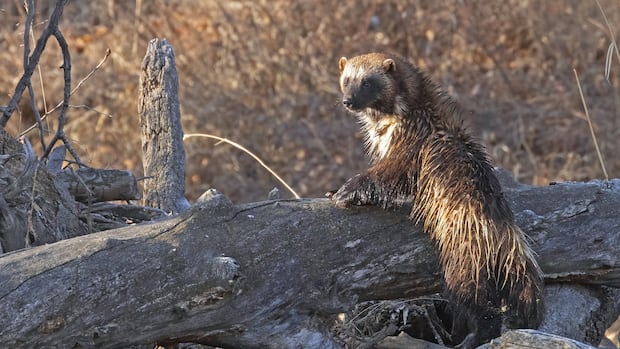
A recent study reveals that skiers, snowshoers, and snowmobilers venturing into backcountry regions are affecting wolverine populations more significantly than previously thought.
Research conducted in the Columbia and Rocky Mountain ranges, including within Banff National Park, indicates that regions with increased recreational activities and roadways show a decline in wolverine residents.
While it was known that wolverines tend to avoid human presence, this study indicates that the repercussions are more extensive than merely steering clear of individuals on hiking paths.
“Recreational activities are not as harmless as we once believed,” stated study author Mirjam Barrueto.
Barrueto and her colleagues from the University of Calgary, in collaboration with Parks Canada, investigated wolverines over an area of 80,000 square kilometers, selecting it due to its suitability as wolverine habitat.
Previous studies led scientists to anticipate that this region could sustain an estimated 500 to 600 wolverines.
However, findings from the study indicate that only around 300 wolverines currently inhabit the area.
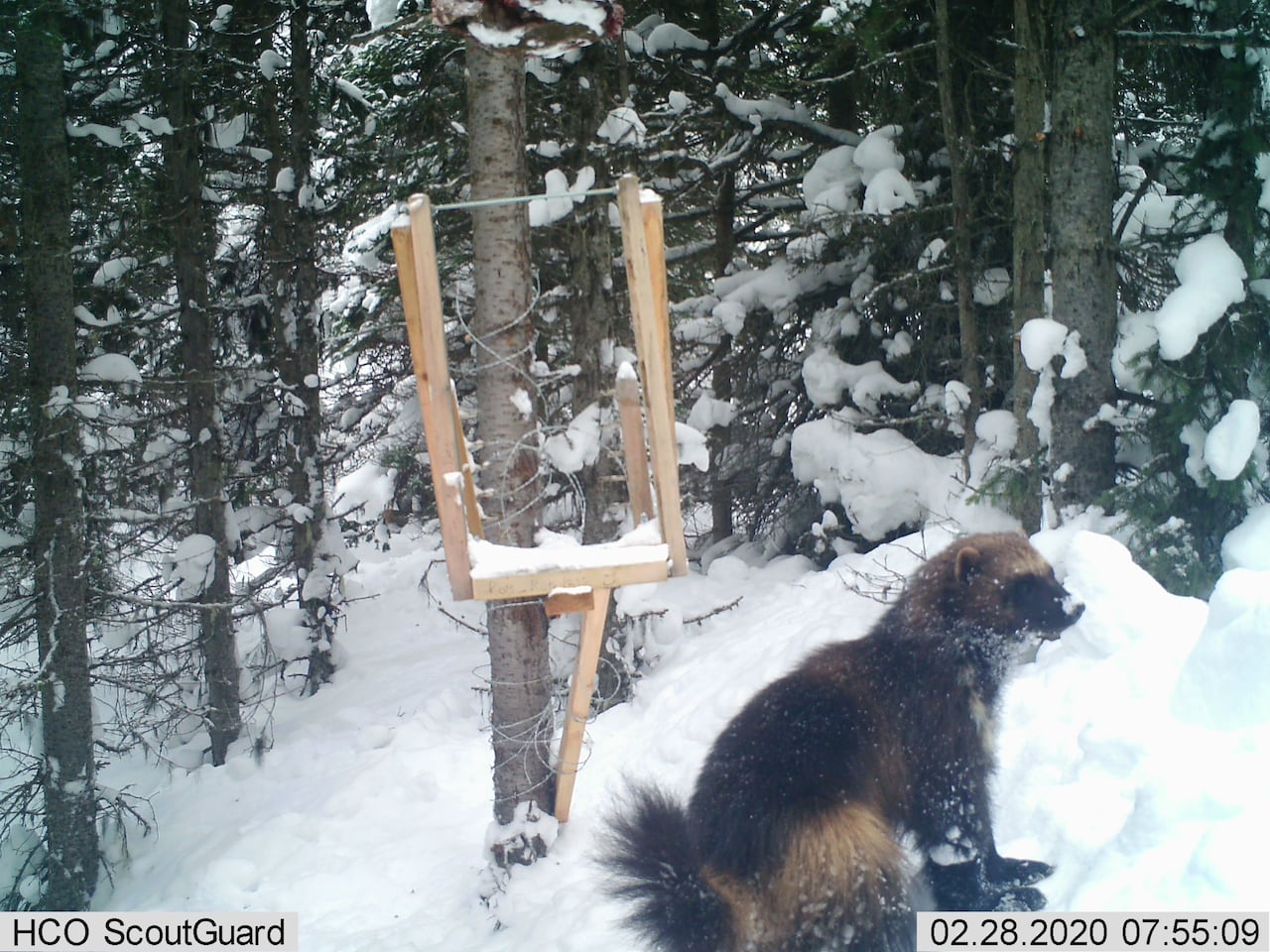
A wolverine investigates a bait station set up by Mirjam Barrueto’s research team. Researchers placed beaver carcasses throughout the study area to attract wolverines and used the device pictured to collect fur samples for analysis. (Mirjam Barrueto)
The research highlights that winter recreational activities exert a greater influence than those in summer.
“Winter recreation typically leaves a larger footprint because, during summer, movement is restricted to existing trails, which are scarce in our study area,” she explained. “In winter, snow covers everything, allowing skiers, snowmobilers, and heli-skiers to access virtually any location.”
Barrueto expressed her astonishment at the extent to which people penetrate what she had considered isolated wilderness.
She noted that female wolverines are especially susceptible to disturbances while raising their young, as they give birth in winter and select specific sites for dens. Disruptions can lead them to abandon food caches or expend energy evading people instead of caring for their kits.
Barrueto suggests that identifying these crucial areas and temporarily restricting access during sensitive winter months could be a viable solution.
The research also revealed that the number of female wolverines diminishes as the number of roads increases, although this trend does not apply to males.
Jason Fisher, a wildlife ecologist and professor at the University of Victoria, who did not participate in the study, emphasized the significance of the findings, noting that the research area predominantly consists of undisturbed land.
“We depend on the Rocky Mountains, particularly the national parks, as vital habitats for wolverine populations,” he remarked. “The fact that they are struggling in a region designated for protection is quite concerning.”
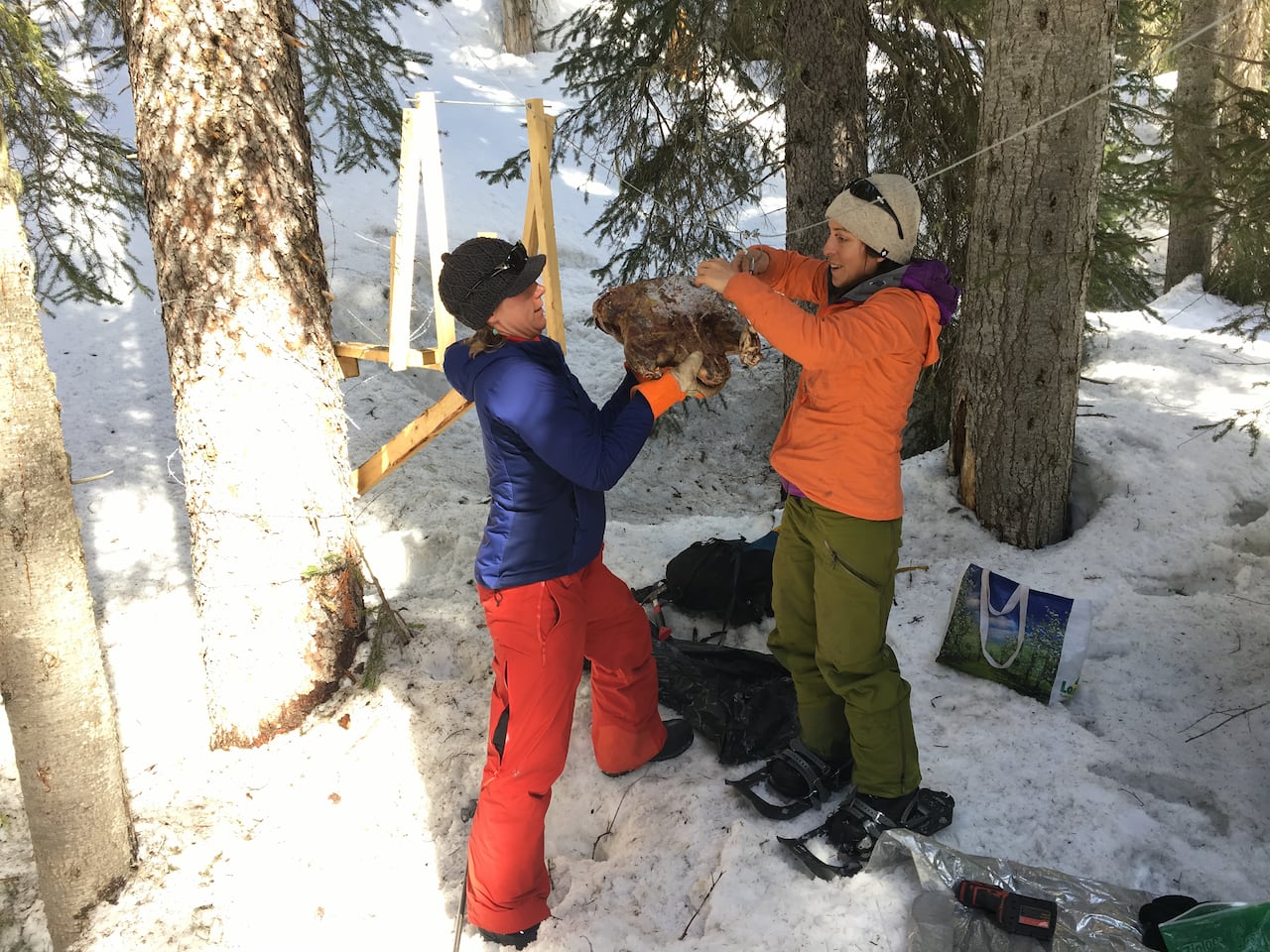
Researchers Aerin Jacob (left) and Mirjam Barrueto (right) baiting a camera station in the Columbia Mountains, April 2018. (Michele Hueber)
Earlier studies have shown that wolverines might begin to avoid an area with just three or four human groups passing through within a few weeks.
This implies that the total number of people may not be the primary concern, according to Barrueto. Even minimal human activity can significantly decrease the wolverine population in an area.
“For this particular species, it doesn’t matter if there are 100 or 1,000 people each day; they will already have left,” Barrueto noted.
She advocates for keeping people on established trails instead of creating new paths or venturing off-trail, which would provide wolverines with the necessary space.
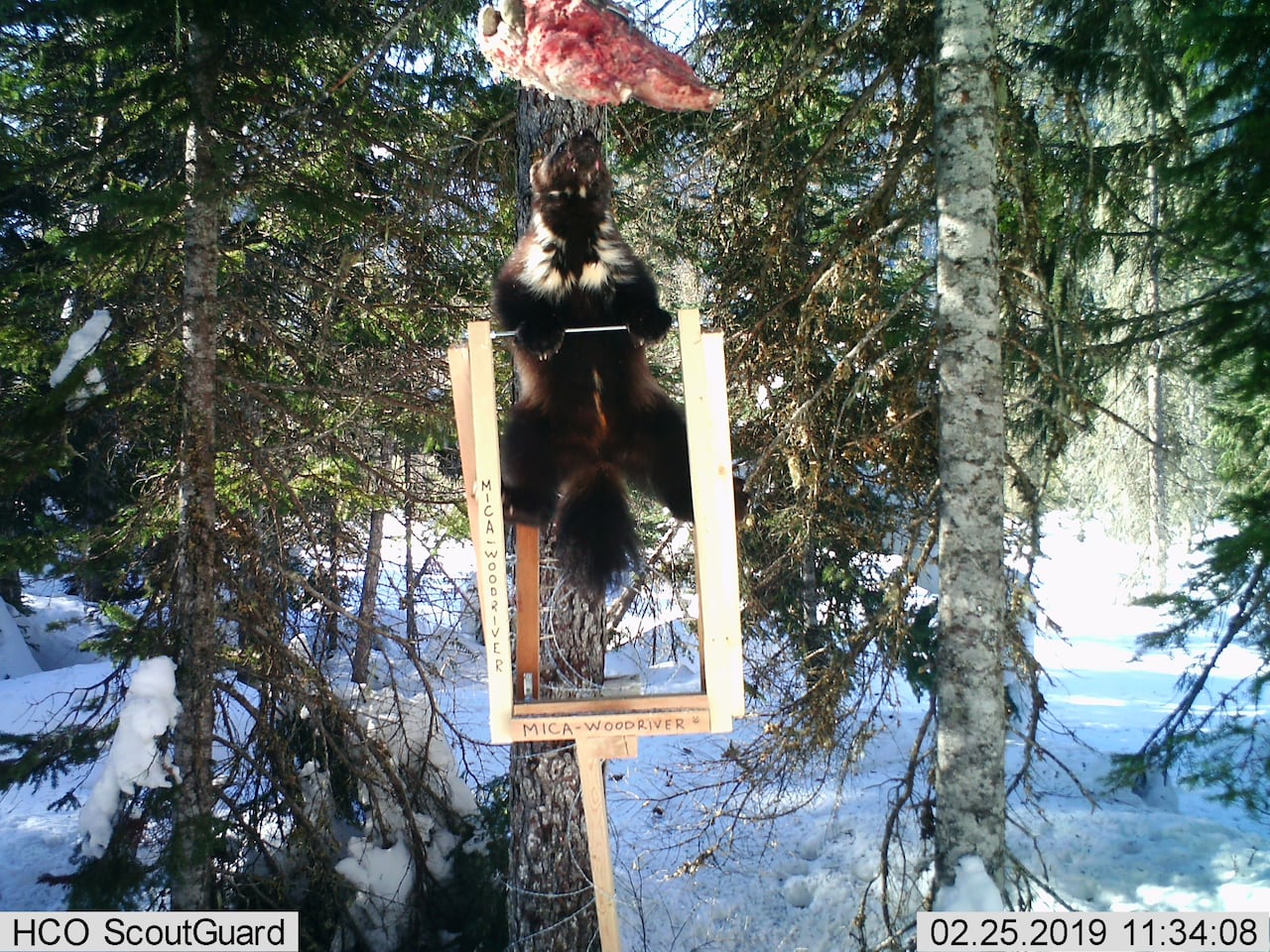
A camera captures a female wolverine at one of the sampling stations. (Mirjam Barrueto)
Fisher pointed out that safeguarding habitats is just one facet of the issue.
Wolverines also face threats from trapping, hunting, and vehicle collisions, and he stressed the need for better management of these risks, as the population has little capacity for additional declines.
“We can achieve conservation,” Fisher asserted. “But it’s crucial to make informed decisions now and take wolverine conservation seriously.”
He added that wolverines have thrived in these mountainous regions for millennia.
“An incredible species that has persisted since the ice age,” Fisher remarked. “I hope to see them continue to thrive for much longer.”

