
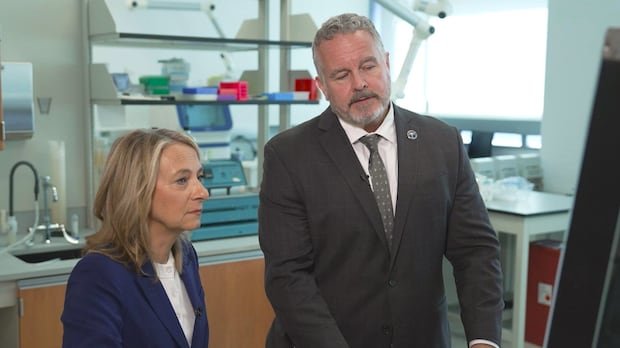
In a Manhattan lab, forensic experts in white coats are tirelessly working to fulfill a commitment made 25 years ago. They are extracting DNA from numerous human remains retrieved from the World Trade Center attack, aiming to match them with samples from personal items provided by victims’ families. The methodology for extracting DNA from remains has evolved over time, incorporating advanced forensic techniques that were not available in 2001.
Mark Desire, the assistant director of forensic biology at the New York City Office of the Chief Medical Examiner, expressed the emotional significance of identifying and reuniting loved ones with their families. A significant portion of the 2,753 individuals who perished at Ground Zero remain unidentified, including about 10 of the 24 Canadian victims.
Recently, the lab achieved a breakthrough identification using a novel technique, combining DNA testing with genetic genealogy, which involves family tree research conducted by the New York City Police Department. Dr. Jason Graham, the Chief Medical Examiner of New York, described this approach as a pioneering advancement with the potential for numerous additional identifications.
Despite the ongoing challenges in excavating and preserving remains, the lab’s relentless efforts continue. Desire, who was a novice scientist during the 9/11 tragedy, emphasized the arduous task of preserving and identifying all victims’ remains as pledged by the former chief medical examiner. The remains, comprising approximately 22,000 pieces, have undergone various preservation methods, including freezing and drying bone fragments.
Advancements in DNA extraction techniques have improved the identification process, although extracting DNA from bones remains particularly challenging. The lab faces the dilemma of limited material for testing, making each test crucial to prevent sample depletion before a successful match is achieved. The application of genetic genealogy offers renewed hope for identifying individuals with unclaimed remains.
While the lab encourages families to provide DNA samples for potential matches, some families prefer not to receive notifications of identifications, finding closure in their own ways. The lab’s anthropologist, Jennifer Odein, acts as a liaison between families and the lab, respecting families’ decisions regarding notifications.
The lab’s dedication to honoring victims and reuniting families underscores its commitment to fulfilling the promise made decades ago. As they continue their painstaking work, the lab remains a beacon of hope for families seeking closure and remembrance for their loved ones lost in the tragic events of 9/11.

