
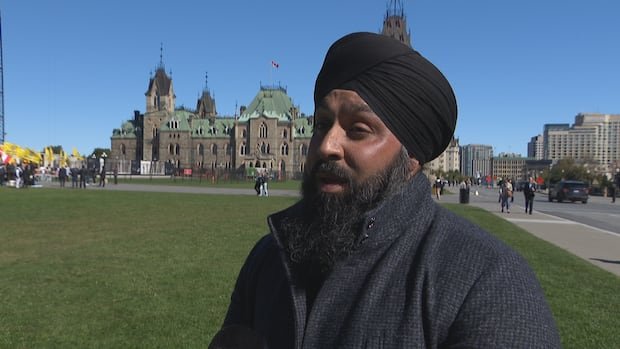
Another Sikh Canadian activist has received a “duty to warn” letter, raising doubts about the Carney government’s handling of Indian government foreign interference and transnational repression concerns. Inderjeet Singh Gosal disclosed that he was contacted by the RCMP and handed the letter on August 14 in Caledon, Ont.
These letters are issued by the police when there is credible intelligence indicating a threat to a citizen’s life, without detailing the nature of the threat. Gosal confirmed the threat to his life and the request for an immediate meeting to deliver the warning in writing. He mentioned that the RCMP reiterated an earlier offer to enroll him in a witness protection program, which he declined, stating his commitment to campaigning for the Khalistan referendum.
Khalistan refers to the proposed independent Sikh homeland in India’s Punjab region, with Sikh separatists advocating for it. Gosal, appointed to lead the Canadian referendum campaign after the death of Hardeep Singh Nijjar, clarified that this was his sixth official police warning.
The issuance of such warnings has increased since the Carney government initiated reconciliation efforts with the Narendra Modi government. Tensions between Canada and India escalated following Nijjar’s assassination, with allegations from the Trudeau government of New Delhi’s involvement to suppress the Khalistani movement abroad. Both countries experienced reduced diplomatic presence due to reciprocal expulsions.
In an unprecedented move, the RCMP held a news conference warning of an Indian government-linked campaign of criminal violence in Canada. Despite the government’s efforts to move forward and strengthen commercial ties with India, duty to warn letters continue to be distributed. These letters do not explicitly mention the Indian government but indicate a threat without specific details.
Canada has faced scrutiny from UN rapporteurs regarding the protection of Sikh-origin Canadian citizens. Gosal expressed appreciation for the RCMP’s communication about the death threats but criticized the Carney government’s approach. He emphasized his commitment to the upcoming referendum, highlighting the democratic exercise that the Indian government aims to suppress through transnational repression.
India has denied involvement in violent incidents in Canada, including the Nijjar case. Gosal remains resolute in his activism, preparing for the upcoming referendum despite the threats he faces.

