
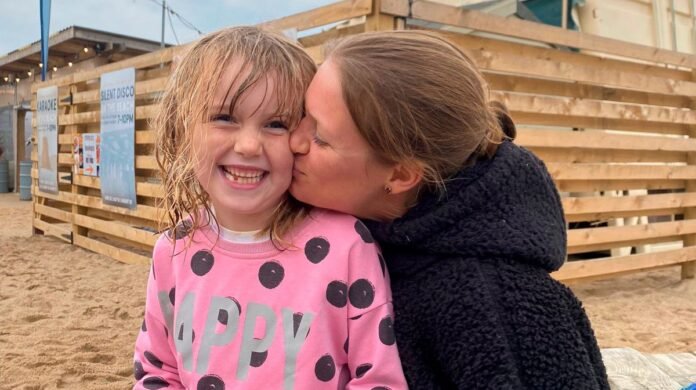

A mother shares that her seven-year-old daughter has developed a fear of the sea after contracting a parasite during a family trip to Cornwall last summer. The young girl, Willow Clarke, experienced intense suffering for 12 days, including frequent vomiting, weight loss, and delirium. Doctors diagnosed her with cryptosporidium, a parasite commonly found in human and animal waste that can contaminate water sources.
Willow’s illness was so severe that she had to miss being a bridesmaid at her aunt’s wedding, a role she had eagerly anticipated. This incident comes at a time when concerns are rising about the health risks associated with swimming in the sea due to the discharge of raw sewage by water companies.
The family visited Carlyon Bay in Cornwall, where Willow likely came into contact with the parasite. Despite not ingesting seawater, she fell ill shortly after their brief time in the sea. Willow’s mother, Alice, believes the bacteria may have been transferred through contact with contaminated hands. Willow’s symptoms worsened rapidly, leading to constant vomiting and extreme fatigue.
After days of suffering, Willow was diagnosed with cryptosporidium and eventually started to recover. However, the traumatic experience has left lasting mental scars on her, causing her to avoid the sea altogether. Alice is certain that Willow’s illness originated from their time in the sea, as they took precautions such as using bottled water during their trip.
The financial strain of caring for Willow during her illness was significant for Alice, who had to take time off work as a self-employed single parent. South West Water denied any responsibility for the incident, stating they do not have a storm overflow at Carlyon Bay. While the source of the parasite remains uncertain, studies suggest cryptosporidium can survive in seawater for extended periods.
The family’s ordeal serves as a cautionary tale about the potential dangers of waterborne illnesses and underscores the importance of water safety measures to prevent such incidents in the future.