
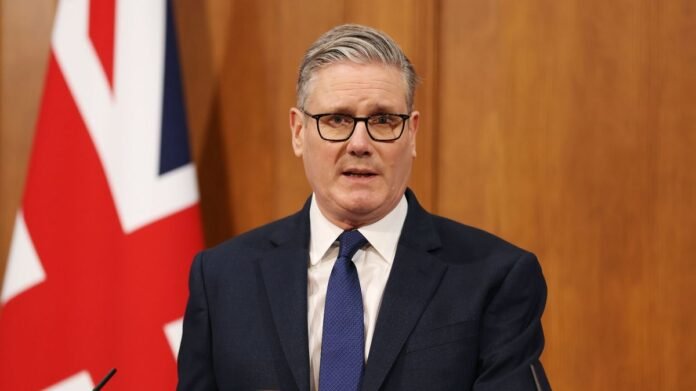

Keir Starmer is embarking on a trip to the Middle East to engage in discussions with leaders from Gulf nations regarding diplomatic initiatives aimed at fostering a two-week ceasefire.
The Prime Minister expressed his approval of the recent development wherein Donald Trump decided to halt potential strikes on civilian infrastructure in Iran. This decision by the US President was made in conjunction with a two-week ceasefire agreement, contingent on allowing shipping activities through the Strait of Hormuz.
Highlighting the significance of the ceasefire, the Prime Minister emphasized the need for collaborative efforts with international partners to uphold and extend the ceasefire, ultimately ensuring the reopening of the Strait of Hormuz on a permanent basis.
Prior to the ceasefire announcement, President Trump postponed his threats of targeting power plants and bridges in Iran just hours before the deadline. Following this, Tehran presented a 10-point plan that formed a feasible foundation for negotiations, a move prompted by mediation efforts from Pakistan.
During his visit to the region, Mr. Starmer will affirm his government’s dedication to de-escalation and engage in dialogues aimed at securing the long-term reopening of the Strait of Hormuz. Discussions will revolve around practical steps to restore smooth navigation along the crucial shipping route, building on positive developments emerging from the ceasefire.
The Prime Minister is scheduled to interact with both UK and local personnel during his trip, acknowledging their courageous efforts in safeguarding national interests and those of allied nations in the region.
The Ministry of Defence confirmed that UK forces have intercepted over 110 drone attacks and the Royal Air Force (RAF) has conducted more than 1600 hours of defensive operations in the area.
Minister Sarah Jones outlined the Prime Minister’s purpose in visiting the Gulf, emphasizing the imperative of ensuring the ceasefire transitions into a lasting agreement through concerted efforts.
Mr. Starmer’s visit comes on the heels of a recent multinational meeting organized by the UK, involving over 40 countries, to initiate discussions on a viable strategy for reopening the vital shipping passage. Additionally, a separate military planning session convened by the UK took place earlier.
Foreign Secretary Yvette Cooper engaged in discussions with US Secretary of State Marco Rubio, focusing on collaborative strategies to restore operations at the Strait of Hormuz. The effective closure of this maritime chokepoint by Tehran has led to significant fluctuations in global oil prices.
Cooper commended the ceasefire announcement but stressed the urgency of halting hostilities in Lebanon for enhanced regional security and economic stability. Resuming operations at the Strait is a top priority for the UK, involving collaborative efforts across various sectors to restore confidence in the vital shipping route promptly.
Efforts at de-escalation and negotiation are crucial to resolving the conflict and preventing further disruptions at the strategic waterway. International cooperation is pivotal in supporting the ceasefire, advancing negotiations, and ensuring stability and freedom of navigation in the region.