
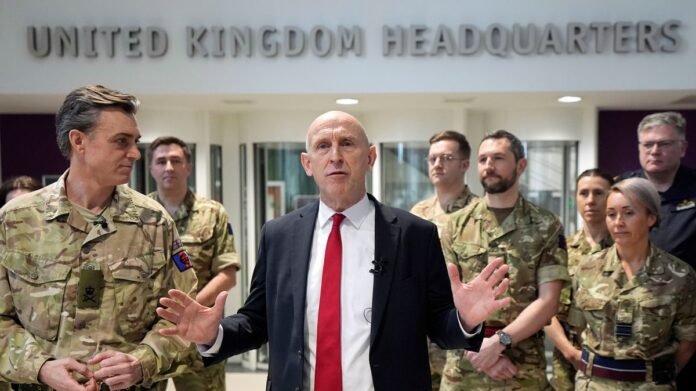

British military forces successfully thwarted a Russian submarine operation to monitor crucial undersea cables during a period of global distraction caused by the Iran crisis, as stated by the Defence Secretary. John Healey issued a warning to Russian President Vladimir Putin, emphasizing that the UK was aware of Moscow’s covert scheme to survey essential infrastructure in the north Atlantic. The Royal Navy mobilized a Type 23 frigate HMS St Albans, RFA Tidespring, and Merlin helicopters to shadow the Russian Akula class nuclear-powered attack submarine along with two spy vessels in an extensive operation involving over 5,000 British personnel.
Utilizing sonobuoys, which are acoustic sensors capable of detecting and tracking underwater threats, the military aimed to deter Russian interference with undersea cables. Additionally, RAF crews conducted more than 50 flights using P-8 Poseidon submarine-hunting aircraft, with support from Norway and other allies.
During a press conference at Downing Street, Mr. Healey directly addressed the Russian President, cautioning against any attempts to disrupt British cables and pipelines, emphasizing the severe repercussions such actions would entail. He highlighted that despite the focus on the Middle East crisis, Russia remained the primary threat to the UK and Nato.
Prime Minister Keir Starmer affirmed the government’s commitment to safeguarding British citizens from the consequences of Russian aggression, pledging to expose any destabilizing activities conducted by Russia. He reassured the public of the government’s dedication to defending national and economic interests globally.
Recent surveillance revealed that a Russian attack submarine had entered international waters in the High North, prompting continuous monitoring by British forces. The Ministry of Defence shared satellite images of Russia’s naval base in Olenya Guba, emphasizing concerns over potential threats to undersea cables and pipelines critical for international telecommunications, data traffic, banking, trade, and gas supply.
The UK has witnessed a notable increase in Russian naval vessels operating near its waters, with incidents such as the Yantar spy ship targeting RAF pilots last year. British actions, including the authorization to intercept sanctioned shadow fleet vessels, have reportedly influenced Russian behavior, as evidenced by the deployment of a Russian warship to accompany fleet tankers.
In response to criticisms regarding the deployment of military assets in the Middle East, Mr. Healey defended the strategic allocation of resources, emphasizing the importance of addressing both visible crises and unseen threats effectively. He also addressed disparaging remarks made by Donald Trump, emphasizing the government’s focus on actions rather than words to demonstrate its commitment to national defense.
Mr. Healey refrained from commenting on social media posts, highlighting the importance of direct conversations with US officials regarding Nato commitments and the necessity for European nations to fulfill their obligations within the alliance. He emphasized ongoing efforts to pressure Russia and maintain a strong defense posture alongside allied nations.